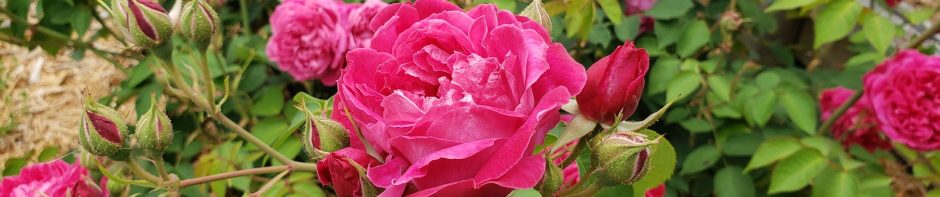

I enjoy the quiet stillness and solitude of nature that come with this time of year. From the Winter Solstice throughout January and now into February, the woods behind my house silently beckon to me. The White Oak and Red Cedar share their strength and integrity. The Willow teaches me how to bend. All have their stories to tell. So each morning I walk into the woods and listen.

I walk down to the pond and along the creek. The creek ran strong when we bought this land in 1996. But over time, with less and less rainfall each year, by last summer the creek stopped flowing and the pond was bone dry. Our long drought made it seem like it would never flow again. I think now about how I decided to make the drought an opportunity to dig a deeper pond. The new “pond” was a big empty hole for weeks and weeks. I remember hoping and believing that by the following spring the pond would be full. With no rain for weeks the outlook was bleak. But in December it started to rain and by the end of January, the pond was full! I didn’t have to wait for Spring! Now the creek is running strong again, the pond is full and the water is flowing! I’m grateful and filled with joy.

Our southern Winter is usually mild and colored mostly with soft greys, mossy greens and browns.

In the winter I love to lie on the ground under the trees. I like to imagine myself part of the earth and feel myself part of the trees and the birds and the air. I like to think of the Root Children, resting underground.

The bare branches and vibrant green of pine and cedar against blue sky gives me a new perspective on life.

Winter is a beautiful and magical time of year. This is the perfect time for introspection, for going deep, for long intimate visits with the Root Children. I enjoy spending time with my woodland friends.


But Spring is just around the corner. The daffodils have been blooming since early January.

The hyacinths and yellow jessamine are also blooming. Just yesterday I noticed the early trees are waking up to bud. In the garden the daylilies, lemon balm, spearmint and other summer plants are pushing up through the soil. I can imagine the Root Children are very busy preparing for the glorious Spring show. I am thinking that I may not be quite ready for Spring. I’d like for Winter to stay for a while longer. But no, it’s all a cycle, always changing, always ebbing and flowing. Life is like that.

The isoflavones may inactivate an array of enzymes involved in the cancer process. More about it, you can follow here: http://www.nfextracts.com/products/soybean-isoflavones. In addition, it is also equipped with cancer-preventive properties such as lengthening the menstrual cycle, altering estrogen metabolism away from cancerous compounds.
Hiya Angie,
I’m really jealous, you’re so lucky to be surrounded by nature like that! Really enjoy your occasional blogs.
Evangeline,
My blog – Pure Argan Oil
Some of those ingredients didn’t post right, It’s .3 oz coconut oil, .3 oz mango butter,
.4 e-wax, .2 conditioning emulsifier, .2 stearic acid
the rest posted ok….. thanks
Some of those ingredients didn’t post right, It’s .3 oz coconut oil, .3 oz mango butter,
.4 e-wax, .2 conditioning emulsifier, .2 stearic acid
the rest posted ok….. thanks
Hi Angie, I'm new to this blog. I'm hoping you or anyone else reading this can help me. I've been making my own lotions for about a year now. I thought I had it down, but in the last month some of my formulas didn't emulsifying right away and I'm frustrated and can't figure out what I'm doing wrong or different. The ones that don't emulsify right away separate a day or so later. I thought maybe it's because my e-wax was 2 years old. So I got brand new wax and it still happened. I need to know if it's temperature or ph or some ingredient…..
Here's my formula:
2.3 oz. almond oil.2 oz. wheatgerm oil.3 oz. coconut oil.3 oz. mango butter.4 emulsifying wax NF (new batch from nature with love).2 BTMS conditioning emulsifier.2 stearic acid.
1 t. vitamin e
12 oz. green tea made with distilled water and 2 organic tea bags.
1 oz. aloe vera gel.
1 T. leucidal (leuconostoc/radish root ferment filtrate) my preservative.
1/16 t. potassium sorbate
pinch or 2 baking soda.
fragrance
I heat the oils, butters, wax till all is melted. At the same time I heat the water with the tea bags. I remove them both from heat and take the temperature it is usually about 175-180. I remove the tea bags and add the potassium sorbate to the water till dissolved and add the aloe vera gel. I then add a very small amount of baking soda to bring the ph up to 7 and add back any lost water. To the oils I add the vitamin e and stir. When both temperatures are 130-140 I add the leucidal preservative (it was recommended to add between these temperatures, it was also suggested I add potassium sorbate to enhance the microbal activity) I start stick blending the oils on high and slowly adding the tea mixture and continue mixing for about 3 minutes. Then I wait 2 minutes and stick blend on med for 10 seconds. I repeat this about 5 times, then I add my fragrance and change it to 5 minutes between blendings and only blend for 5 seconds each time. And again repeat this a few times. After that I hand stir till I bottle.
I would greatly appreciate any wisdom or guidance you can give…. :o)
Hi Fran,
I’m happy to try to help! My best suggestion is to begin working with a formula set up in percentages by weight. Your ingredients are listed out as a recipe. Recipes using volume or fluid measurements aren’t accurate and make it difficult to problem-solve. Unfortunately this limits me in the help I can provide.
I’ve noticed a few problems with your ingredients and procedures. I’ll comment on each one:
1) While there are a number of different “ewax” emulsifying products available, they are all similar and I doubt your “ewax” is the major problem with your emulsion. However it’s true that there are much better emulsification options these days. We offer a number of excellent Complete Emulsifiers at The Herbarie – SugarMulse, NatraMulse, Olivoil Glutamate Emulsifier, Olivem 1000, PlantaMulse Pastilles.
2) While there is variability in the commonly used “ewax” products on the market, most will need to be utilized around 30% of the oil phase or 6% of the total formulation. For example, if your oil phase contains 20% oil phase then you would use about 6% “ewax”. These percentages are by weight, not volume measurement. This is another reason why it’s important to use a formula. We can’t tell if your “ewax” amount is correct or not.
3) Adding baking soda is not a good idea and it will be best to remove it.
4) Sorbic Acid inhibits mold, but Potassium Sorbate doesn’t. When Potassium Sorbate is added to water it will be quite alkaline with a pH around 8 or 9. For Sorbic Acid to be released, the pH needs to be reduced to 5.0 or less so pH of 7 is too high. The more acidic, the more effective it will be. Without an acidifier such as citric acid or glucono delta lactone it will be useless. Since there is no acidifier in your listing, chances are the pH of your emulsion is too high. This could be disrupting the emulsion from the water phase. Also, I would recommend a different procedure for the addition. I would make a slurry of potassium sorbate and citric acid in water – checking the pH to be sure it’s where I want it to be – and add this at cool-down.
5) You may want to consider buying a pH meter. We offer ExTech pH meters that work beautifully. Without monitoring pH accurately, you could be creating an emulsion that’s not skin friendly.
6) I can’t tell if the Leucidal is being utilized at the correct percentage or not. We recommend using 3-4% by weight of the formulation.
7) There’s no antioxidant in the listing. I’d recommend using Rosemary Antioxidant CO2 Extract around 0.1%.
8) The procedure you are using is not correct. Depending on which emulsifiers are used, the procedure may vary slightly, but basically oil phase and water phase should be heated separately to approximately 175F. I prefer adding water phase to oil phase, but it doesn’t really matter. Once the phases are combined, then mixing begins. I prefer adding preservatives, etc at temps around 100F.
In all honesty, I believe this listing of ingredients is not going to work well for you. We have many emulsion formulas listed in our website Formulary that could work much better for you.
http://www.theherbarie.com/The-Herbarie-Formulary.html
All of our formulas are set up in percentages by weight, but I have also measured out recipes for those who do not yet own a scale or know how to use a formula properly. Here’s one Plantamulse Pastilles formula that is really wonderful and easy to make:
http://www.theherbarie.com/Plantamulse-Pastilles-Naturally-Silky-Cream-Recipe.html
Please let me know if you have any questions or need any clarification.
Thanks for writing!
Angie