Summer!

Dear Blog Friends,
I am finally finding some time to write again! As usual, this has been a very busy spring and summer in the garden and

Each morning in the summer, I wake up early and go into the garden at daybreak. Daybreak is such a special time – every day new and fresh with possibilities. I enjoy spending an hour or so going through

my yoga routine, meditating, watering plants, pulling weeds. I listen to the birds’ wake up calls, breakfast on grape tomatoes, cucumbers, and blackberries. As the world wakes up, I can catch the earthy,

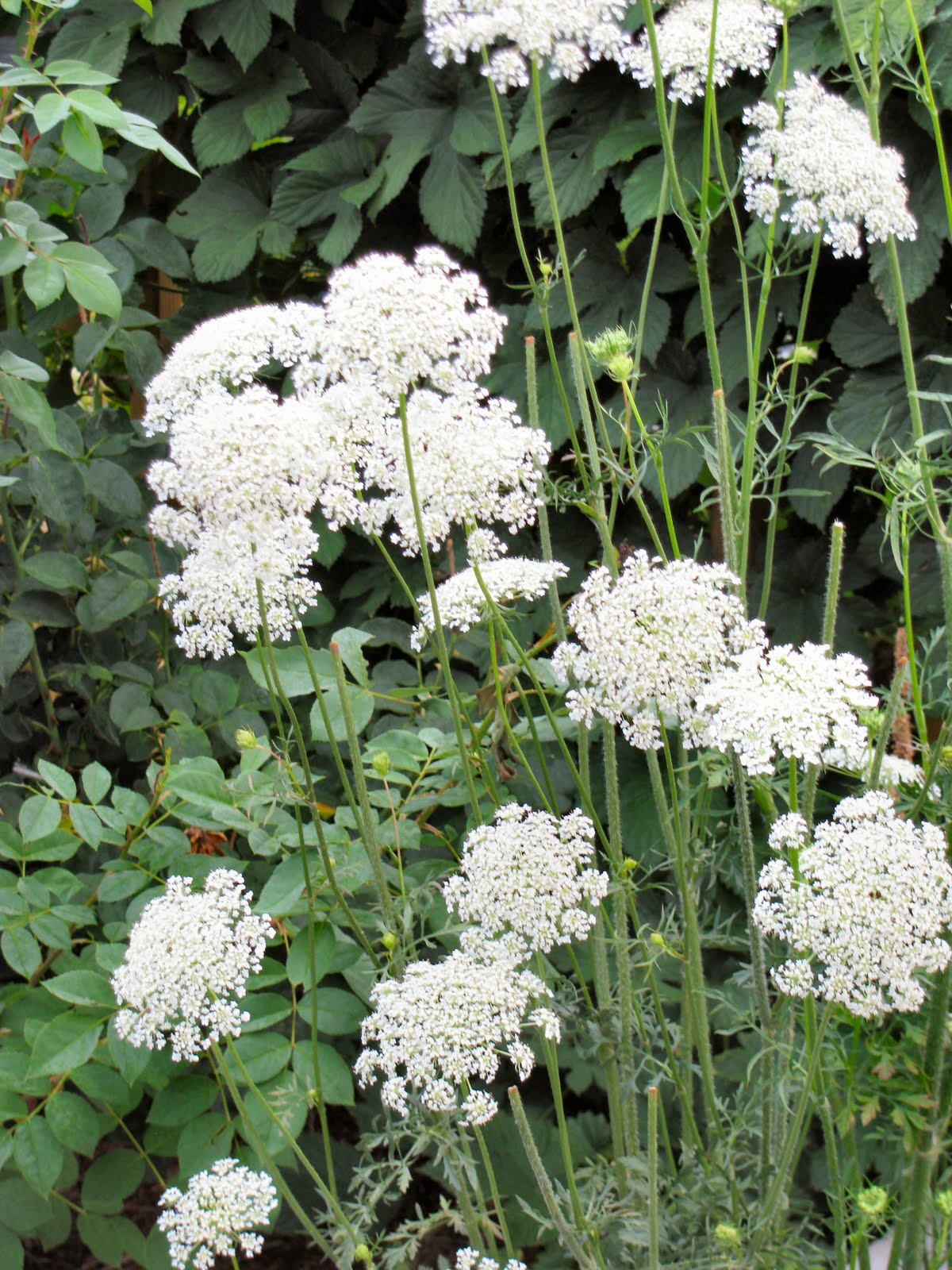
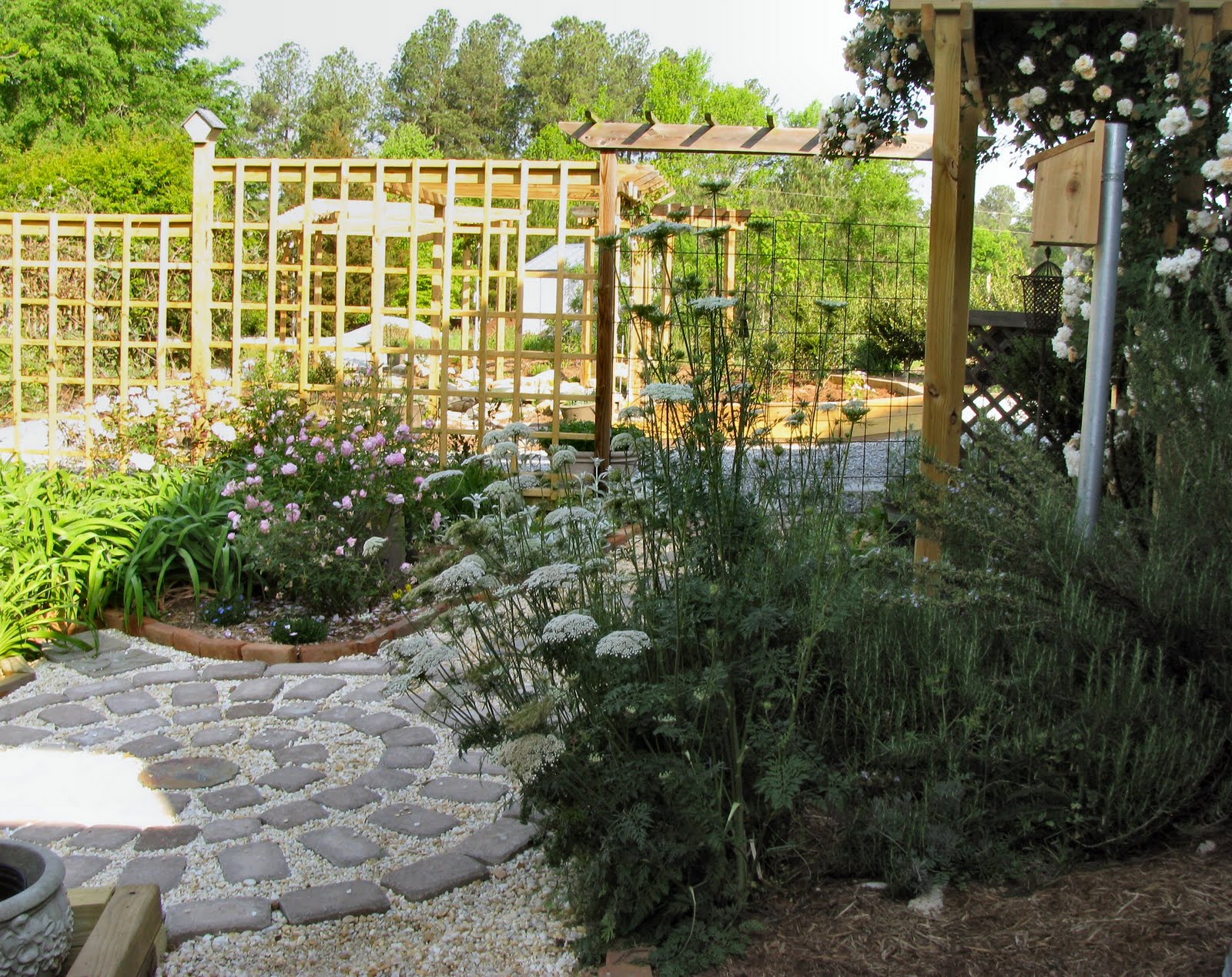
carrot scent of the Queen Anne’s Lace while I appreciate her delicate, lacy beauty. I am so thankful to be able to enjoy nature’s symphony and aromatherapy every morning in my garden!

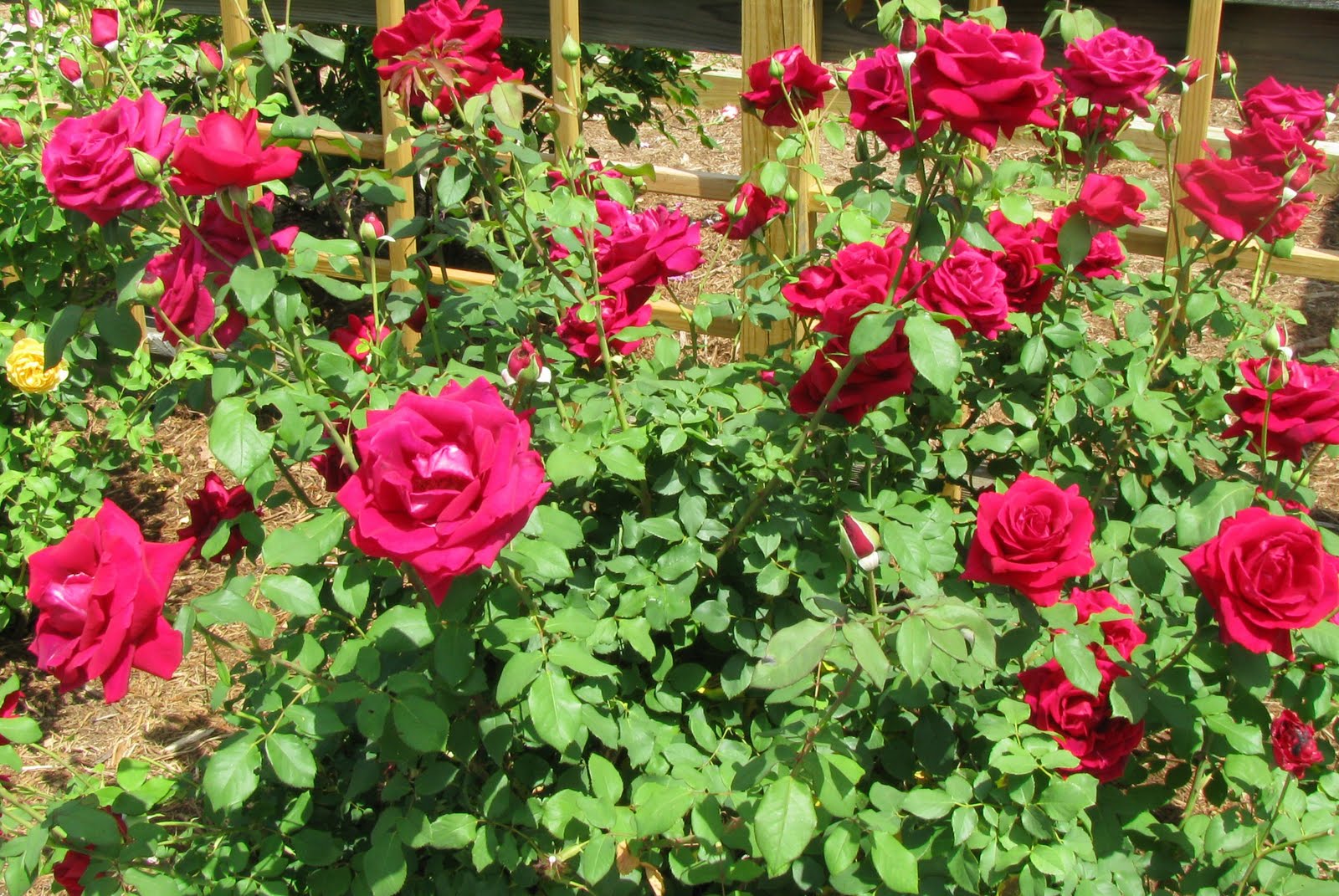
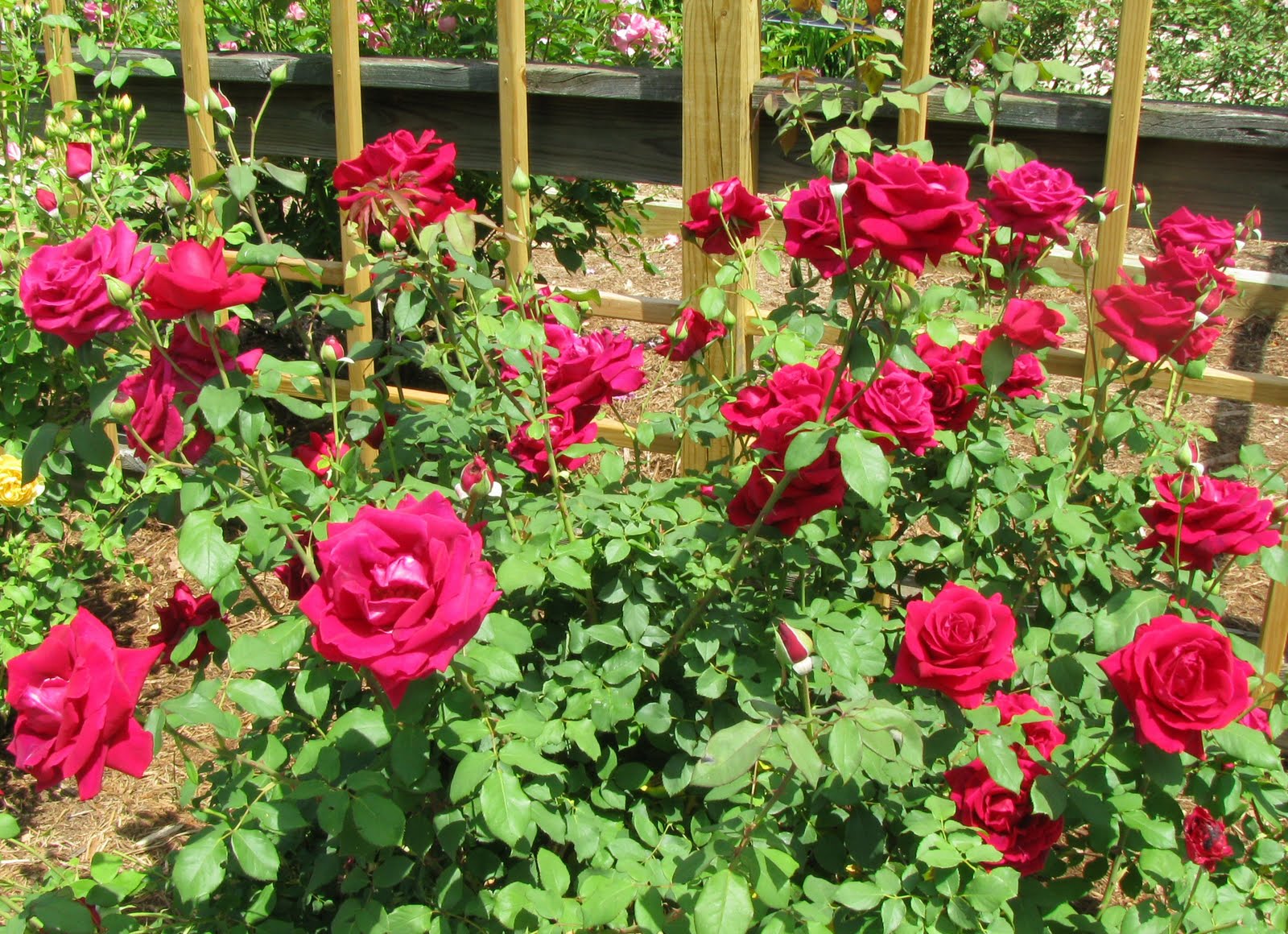
Many of the roses are resting now. I’ve given most of them a summer shearing which will rejuvenate them for their glorious Fall Bloom. The pretty little Cecile Brunner, Marie Pavie, Borderer and Roxy are

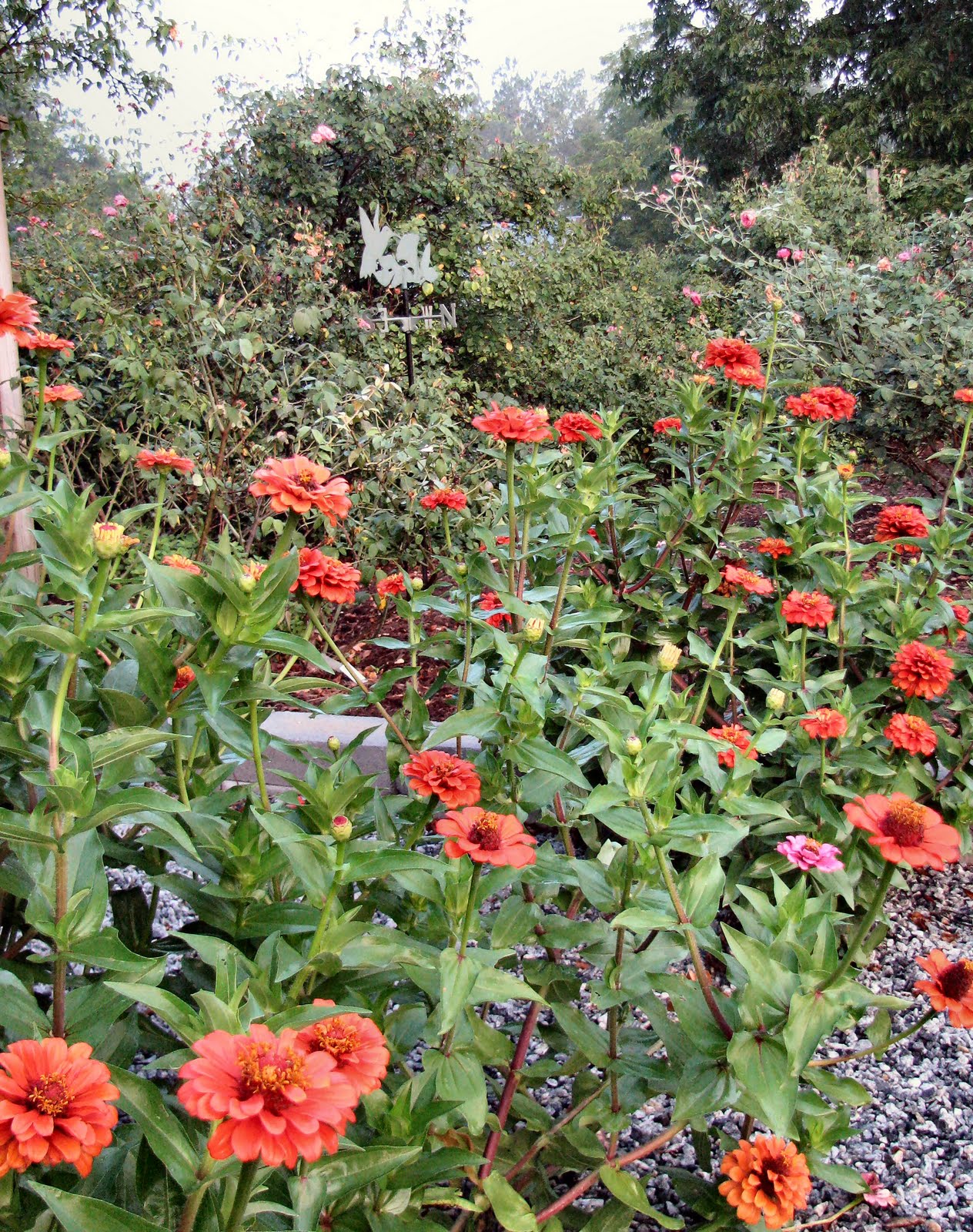
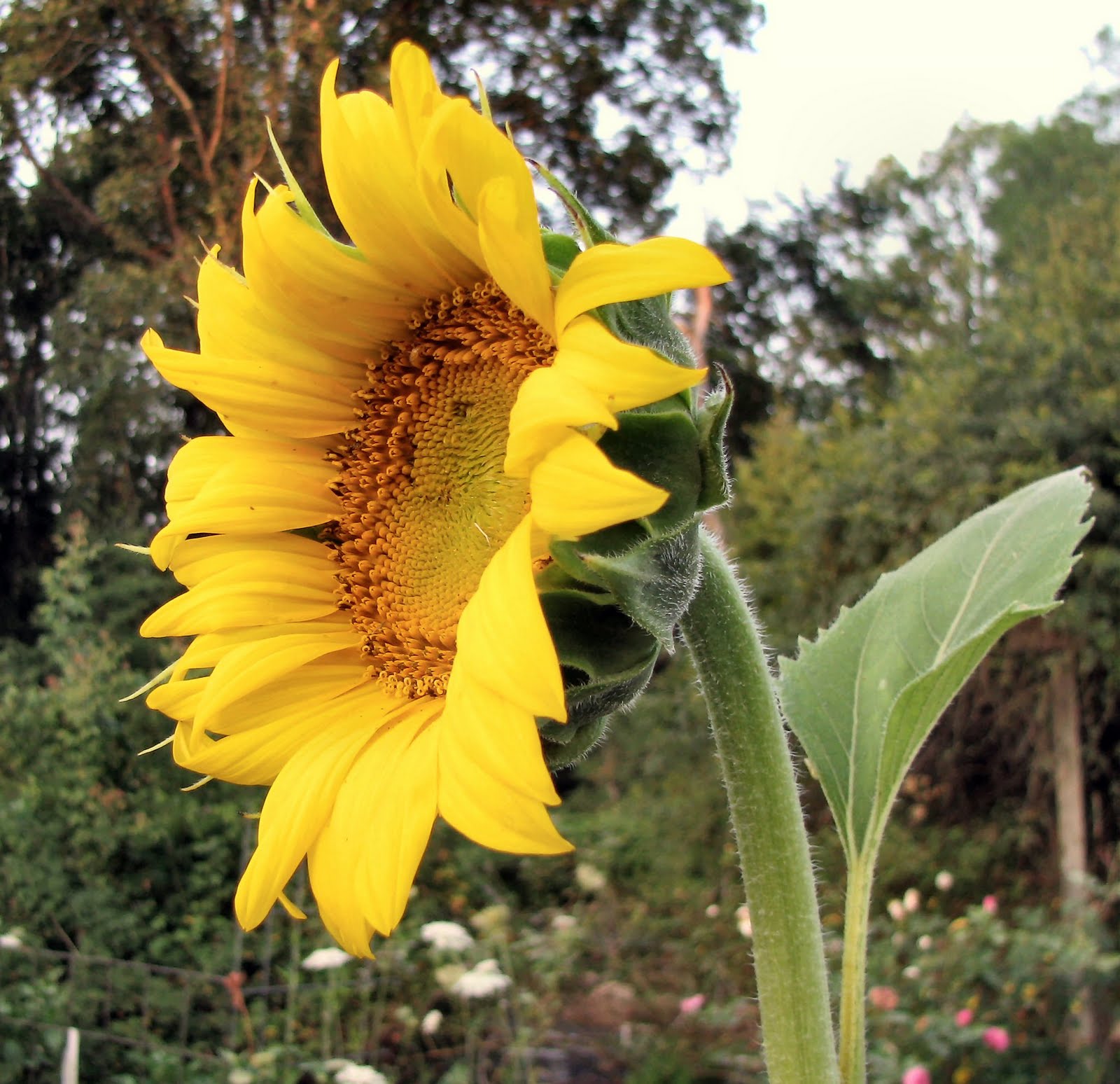
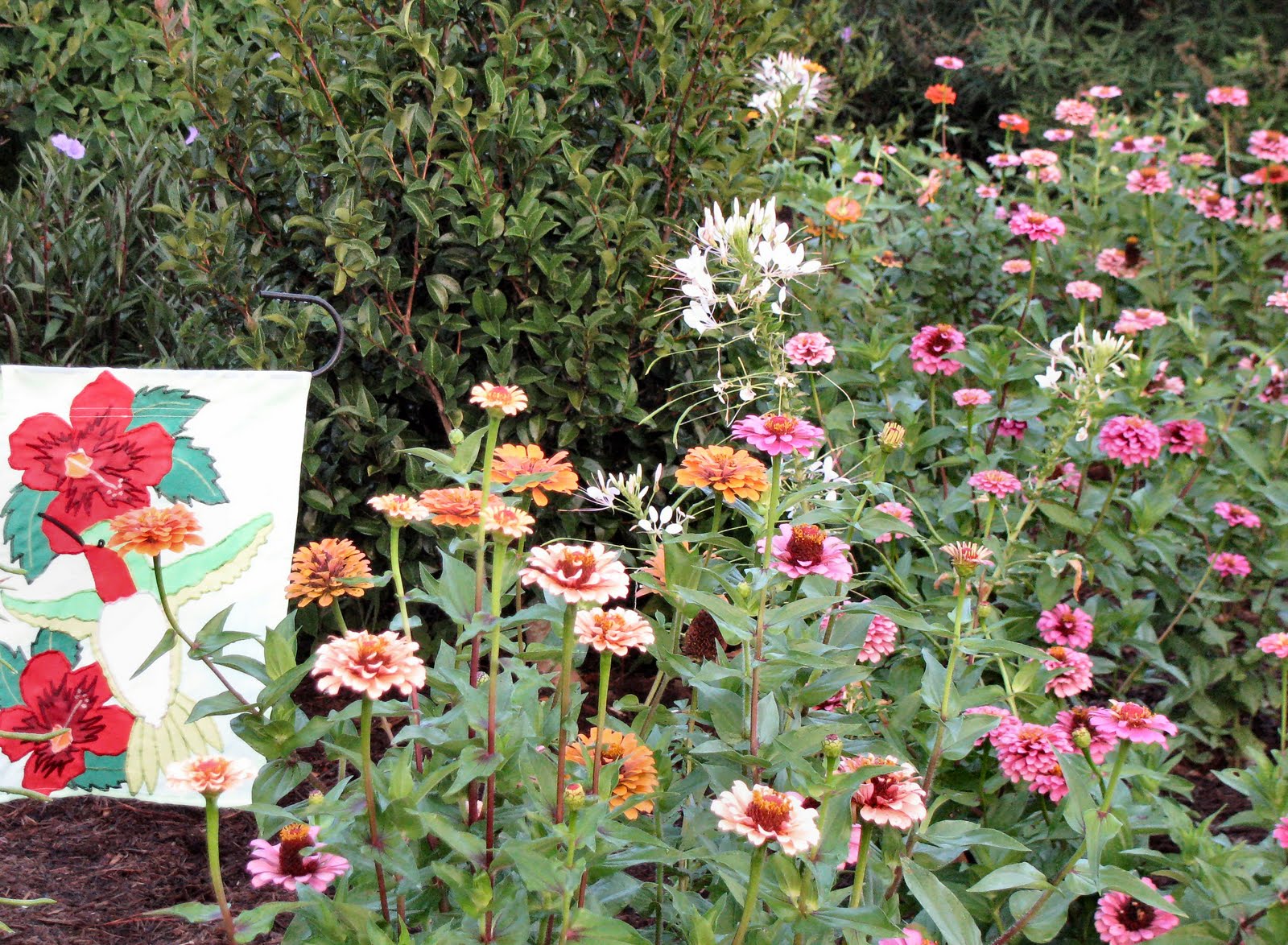
still lush and blooming and seem very happy – even in our extreme summer heat. The sunflowers and zinnias have sown themselves in the gardens and are now everywhere. My Zinnias love hot

summertime! They are the happiest and most vivacious flowers – proud to be Stoney Hill Farm Cheerleaders in the gardens with their hot pink, neon orange, sunny yellow and every shade in between petals.

Each year the butterflies, bees and I enjoy them immensely.

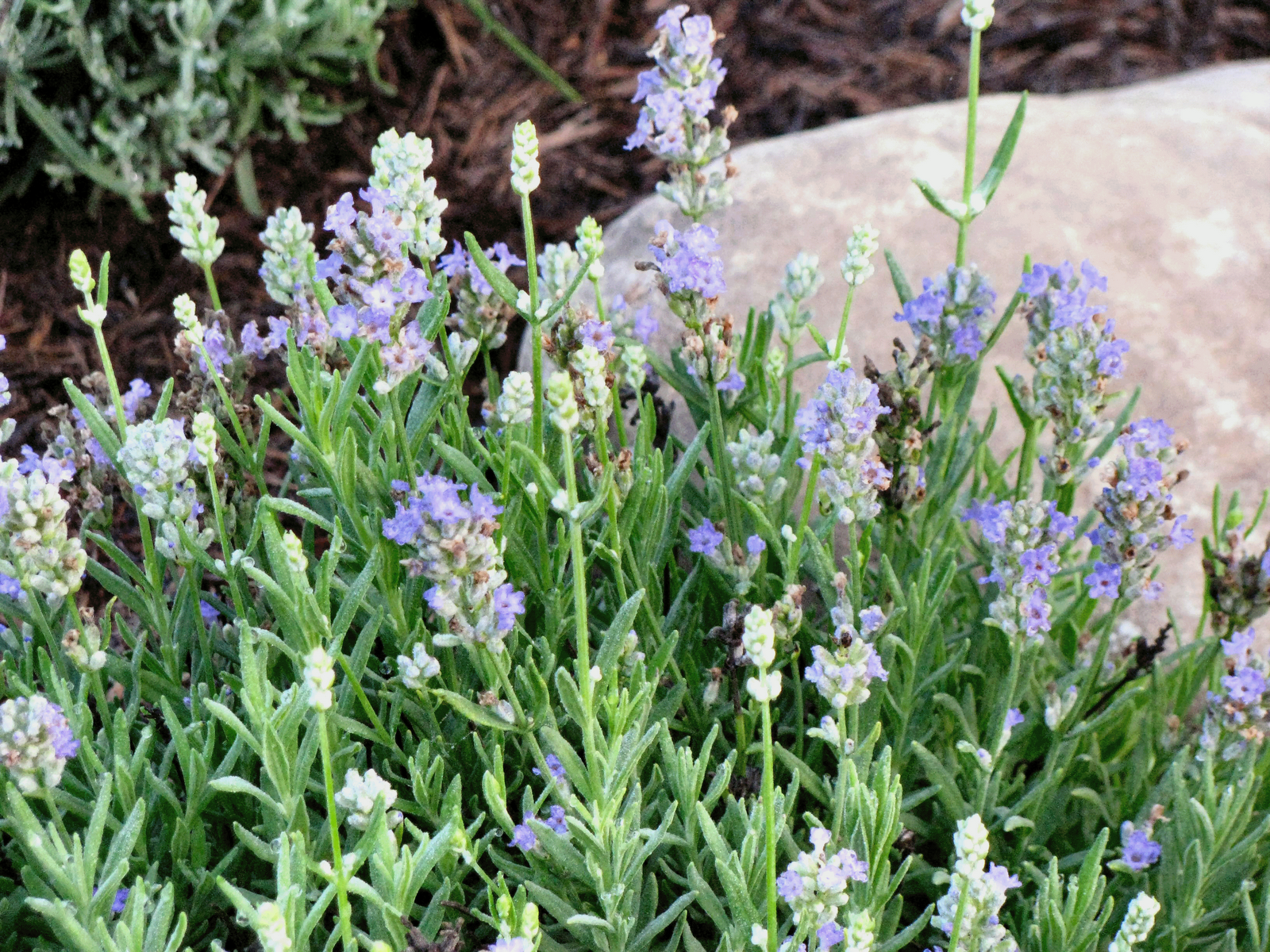
My pretty lavender plants are flowering profusely right now and the scent is wonderfully clean and fresh. I always enjoy distilling Lavender Hydrosol because it’s so aromatic. I treated myself to a new version

of my Luscious Lavender Natramulsion which is very, very conditioning and smells wonderful! This all natural formula is based on Natramulse which is one of our several plant-based emulsifiers. This

formula is full of skin softening and conditioning ingredients! Natramulse, Shea butter, Extra Virgin Coconut Oil and Botanical Complex LSCD form the richly conditioning oil phase. I also loaded this formula

with skin nourishing oats – Avena Oat Extract WS, VenaSilk and Symglucan – and all work in synergy to moisturize and nourish dry skin. I used our Lavender Hydrosol as the entire water phase. Our new,

multifunctional Antioxidant Synergy Blend will protect the formula from oxidation as well as serve as a powerful antioxidant for skin. Lavender Essential Oil gives the formula a nice clean, fresh scent while

lending some antimicrobial/preservative activity. Leucidal Liquid, manufactured by Active Micro Technologies, is my favorite natural preservative and serves as the primary preservative in the formula.

I’ve packaged this cream in our new Magic Airless Dispensers. This formula is very substantial so during our hot southern summer I only use it at nighttime after showering and as a hand cream during the

day. I keep one dispenser in my office to condition my dry hands after coming inside from the garden and also keep one at home to use at nighttime.

Ultra Moisturizing Oats and Lavender Natramulsion

Oil Phase
8% Natramulse
12% Organic Shea Butter
5% Organic Extra Virgin Coconut Oil
3% Botanical Complex LSCD
2% VenaSilk

Water Phase
56.57% Lavender Hydrosol
5% Symglucan
5% Avena Oat Extract WS

Cool Down Phase
0.25% Antioxidant Synergy Blend
2% Leucidal Liquid
1% Lavender Essential Oil

-Oil Phase: Weigh and combine first 4 ingredients (weigh VenaSilk and set aside) in a stainless steel or heat safe pot/vessel. Heat to approximately 175F or until solids have melted and the oil phase is

clear, not cloudy. Once the solids in the oil phase have melted, remove from heat and disperse VenaSilk to the hot/melted oils.
-Water Phase: weigh, combine and heat ingredients to approximately 175F
-Add heated Water Phase to heated Oil Phase and mix continuously until cooldown (approximately 100F).
-When temperature of emulsion has cooled to about 100F, add Cool Down ingredients. Mix until homogeneous.
-The finished emulsion is thick and creamy. I used our new airless dispensers which work beautifully. – Pearl Airless and Magic Airless.

Tip 1: Using an electric stovetop is preferable – just be sure to monitor carefully.
Tip 2: Even though VenaSilk is mostly water soluble, we disperse it into the oil phase so the particles will more easily separate.
Tip 3: When the emulsion has cooled, scoop into a gallon size freezer bag, remove air and seal. then cut a tiny tip off the corner and “squirt” into containers – no mess and easy peasy 🙂

*******************************************************************************************************

Since my last blog, we’ve brought in a number of new products including Avena Oat Extract WS, Antioxidant Synergy Blend, Wild Carrot Seed Hydrosol, and SCI Pearl. We are offering a Special

Introductory Sale on these new products so now is the best time to try them! We are also very pleased to offer airless dispensers – Magic Airless (50ml) and Pearl Airless (30ml). I just love these new

dispensers! I’m so excited about all these new products and have been talking with many of you about them already. But here are the details that you can also view on our website:

Our Avena Oat Extract WS is derived from the entire oatstraw herb which includes the green stalks, the leaves and the milky grain. Constituents include polysaccharides such as beta glucan, flavonoids,

silica, triterpenoid saponins (including avenacosides), and phenolic compounds (avenanthramides).

Avena sativa is a member of the Poaceae, or “grasses” family. Wild oats (Avena) likely originated in Eurasia and were first cultivated (sativa) in Greece and Rome around 400BC to 1st century AD. This

nutrient-rich, ancient grass is now cultivated throughout the world and valued for its many uses.
While the traditional use of oats in folklore is well-established and has stood the test of time, modern science has documented excellent efficacy as well. Studies have repeatedly demonstrated the benefits

of oats and oat derivatives in skin care products.

These constituents are known to have anti-inflammatory, anti-irritant, and moisturizing characteristics. When used topically, Avena sativa can soothe, smooth, and nourish skin and hair.

Avena Oat Extract WS is recommended for all skin types, but especially for sensitive skin and dry and flaky skin. Avena Oat Extract WS is recommended for all hair types, but particularly for dry or damaged

hair or flaky scalp. Avena Oat Extract WS is useful in moisturizers, anti-aging products, smoothing and soothing products. Avena Oat Extract WS, can be used in hair care products to improve conditioning

and manageability.

Avena Oat Extract WS is a water soluble extract and can be used in toners, facial cleansers, shower gels, creams and lotions, shampoo, and conditioners.

************

Antioxidant Synergy Blend (ASB) is a multifunctional, proprietary blend of ascorbic acid, rosemary extract, and tocopherols. This powerful antioxidant blend has the potential to function as a topical free

radical scavenger for skin care products as well as inhibit oxidation and delay rancidity in natural oils and products that contain oil.

Human skin is our natural barrier that serves as a protective shield. Our skin is constantly bombarded by physical and chemical stressors. These environmental stressors can directly or indirectly produce

reactive oxygen species (ROS). ROS molecules upset the natural balance of human skin which can lead to skin damage and premature aging. Topical antioxidants have the capacity to neutralize ROS and

help restore skin’s natural balance.

Antioxidant Synergy Blend (ASB) contains Ascorbic Acid (Vitamin C), Rosemary Extract, and Mixed Tocopherols (Vitamin E) in a vegetable oil base.

Ascorbic Acid functions as the initial free radical scavenger and can help to regenerate natural antioxidants in lipid systems and is good for skin.

Rosemary Extract functions as the long-term, broad spectrum antioxidant by offering carnosic acid/carnosol components to the blend.

Natural mixed tocopherols isolated from vegetable oils and concentrated to contain naturally occurring d-alpha, d-beta, d-gamma and d-delta tocopherols Mixed tocopherol compounds enhance and

compliment one another to increase their overall antioxidant activity.

This powerful, all natural, synergistic blend offers unique antioxidant functionality for cosmetic formulators.

*************

Wild Carrot Seed Hydrosol (Daucus carota) is excellent for all skin types, but is especially recommended for sensitive skin or mature skin. Suzanne Catty says Wild Carrot Seed Hydrosol soothes eczema,

psoriasis, inflammation, and promotes the growth of healthy new skin cells. Some sources report reduction in fine lines and wrinkles.

Daucus carota is commonly called Queen Anne’s Lace. Daucus carota is a biennial plant – growing from seed the first year and blooming the second year. Queen Anne’s Lace reseeds every year and

grows beautifully and happily in our gardens. The delicate, umbrella shaped blooms are actually comprised of hundreds of tiny, white flowers with one dark red flower in the center. Legend suggests Daucus

carota is called Queen Anne’s Lace because the delicate flower cluster resembles lace and the red flower in the center represents a blood droplet where Queen Anne pricked herself with a needle when she

was making the lace. We harvest Daucus carota when the flower cluster matures and “turns to seed”. The Herbarie’s Wild Carrot Seed Hydrosol is distilled from the seed heads and flowers of this beautiful

plant.

Wild Carrot Seed Hydrosol has a mild, earthy, carrot scent and is recommended for use in body spray/splash, the water portion in lotions and creams, antiaging products, anti-inflammatory products, and

facial toners.

I made a super cool facial toner with our Wild Carrot Seed Hydrosol, Cucumber Extract WS, Aloe Vera 100% Liquid, and Avena Oat Extract WS that I’d like to share with you. The formula is very simple, but

quite nice. I’ve weighed and measured a 200 gram batch for those who do not yet have a scale:

Cucumber Aloe Facial Toner with Avena Oat & Wild Carrot

Cucumber Extract WS 25% = 50 grams = 1/4 cup
Aloe Vera 100% Liquid 25% = 50 grams = 1/4
Wild Carrot Seed Hydrosol 10% = 20 grams = 2 tablespoons
Avena Oat Extract WS 5% = 10 grams = 2 teaspoons
Distilled Water 33% = 66 grams = 1/3 cup
Aloe Advanced Leucidal Liquid 2% = 4 grams = 1 teaspoon

This formula can be used as a facial toner after cleansing your face or it can be used as a cool, spritzer any time of day. Just combine all ingredients in a bottle with a dispensing cap or spray mister. For a

more concentrated toner, do not add the distilled water or the Aloe Advanced Leucidal Liquid.

**************

SCI Pearl offers dense, luxurious lather and leaves skin feeling soft and conditioned after rinse off. SCI Pearl is an easy to use, buttery form of the mild, anionic primary surfactant sodium cocoyl isethionate.

With a low melting point (50-60C), SCI Pearl is much easier to disperse into water than SCI 85% Flake or Noodle.

Formulating Guidelines:
-Can be combined with one or more of our other surfactants (SMC Taurate, Cocoamidopropyl Betaine, DLS Mild, Plantapon, Coco Silky Cleanse, etc.). When used at 20% or greater will yield

creamy/pearly/opaque product. Lower percentages will yield clear product. Heat together with water to melt point (about 120F), stirring to incorporate. See Formulary for more information.

This coconut derived, biodegradable surfactant can be used to create elegant and mild shampoo, body wash, facial cleansers and other personal care products.

Characteristics:
-Mild to skin and eyes
-Excellent foamer in hard or soft water
-Imparts a soft afterfeel to skin or hair
-Based on fatty acids from natural, renewable coconut oil
-Easy to use paste form
-50% Activity
-Contains 5.0-8.5% free fatty acid
-pH 10% solution @ 35C: 6.2-7.2
-Biodegradable
-Yields opaque, creamy, and pearly products at higher percentages
-Yields clear products when used at lower percentages
-Can be used for solid cleansing bars

I’ve enjoyed making creamy shampoo and body wash for friends, family and myself with our new SCI Pearl!
Posted in Musings From Stoney Hill Farm | 1 Comment

The Roses Are Blooming!!

Dear Blog Friends!
The roses bloomed early this year!

In April, we had several garden tours and gatherings to celebrate Spring, the blooming of the roses, and my birthday! So many of you have expressed interest in our farm and gardens and I wanted to share our celebration with you all.

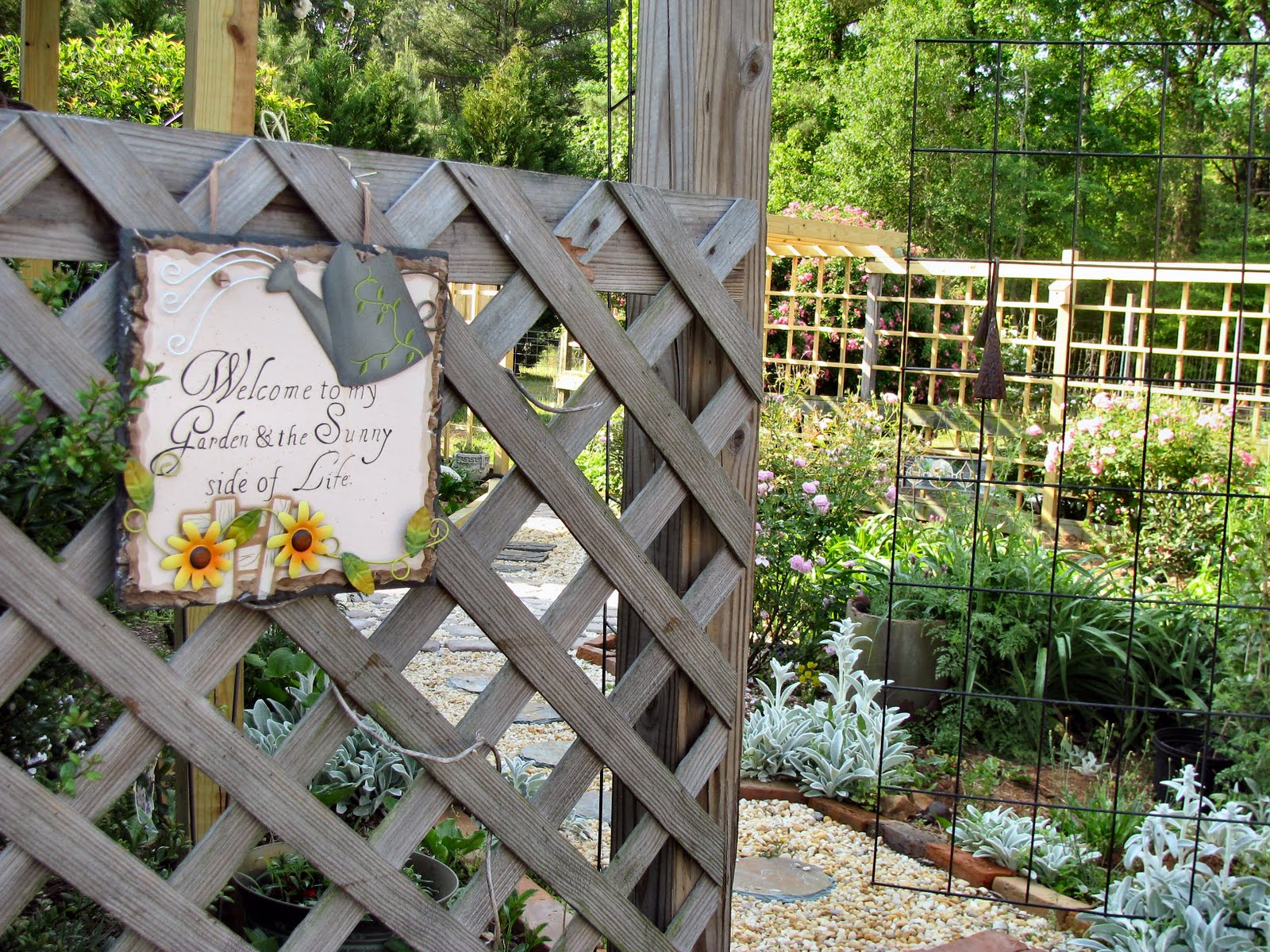
Welcome to my Garden!

This is my Secret Garden looking out towards the farm and new waterfall and Kiwi bed. I created a mandala of sorts including pavers with some of my favorite symbols – hummingbird, butterfly, bee, and leaf.

We built this trellis for Alister Stella Grey last year when she outgrew the porch pillar. I’ve been so looking forward to her blooming this spring and she has not disappointed me!

Alister Stella Grey is a noisette rose and she will bloom all summer. The fragrance is lovely. This spot is just outside my lab so I can smell her fragrant blossoms whenever I walk outside on the porch!

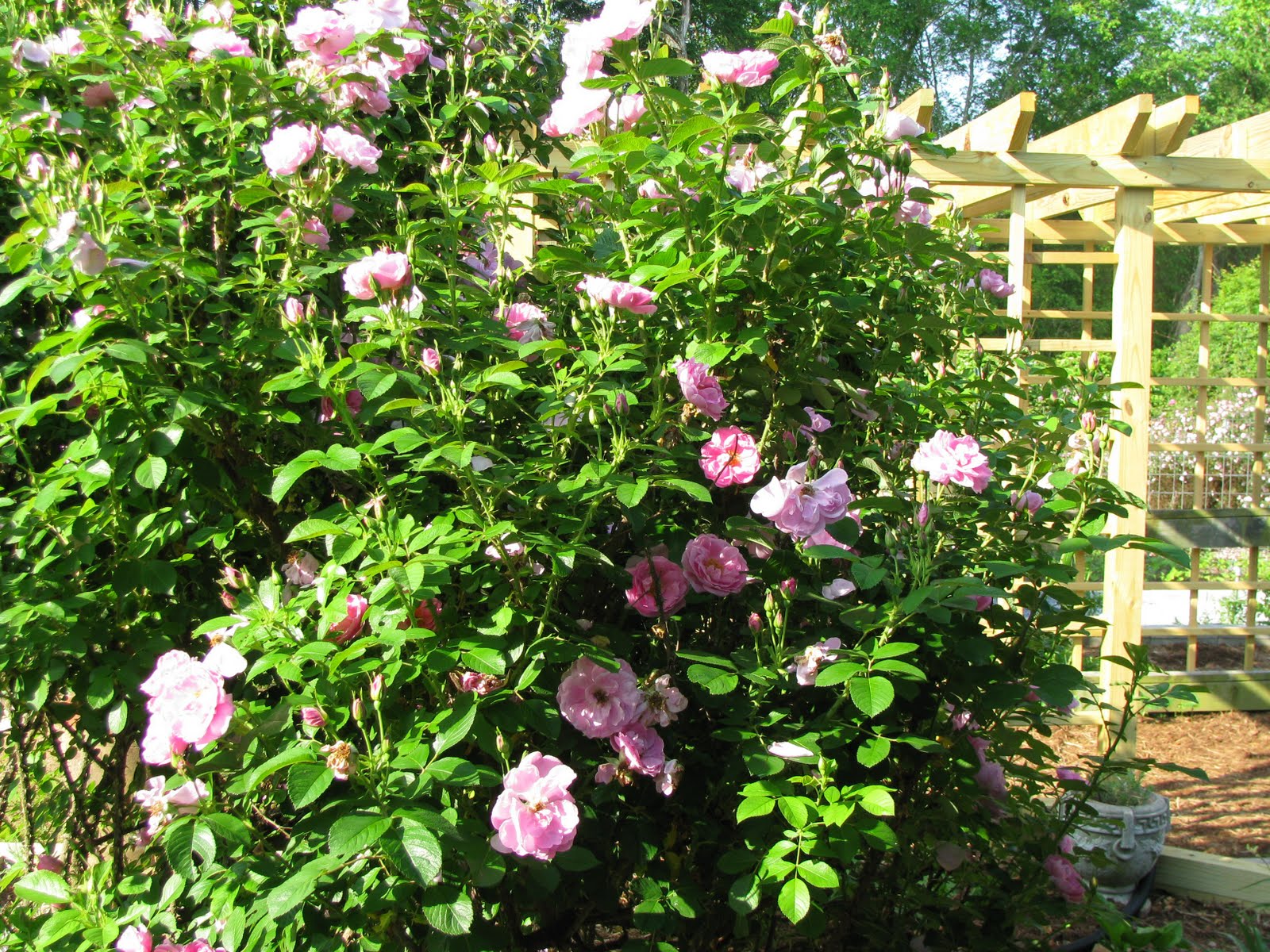
Sarah Van Fleet (to the left and up close below) is a Rugosa and quite thorny, but beautiful and fragrant. Late winter (February) she was pruned back and has provided lush, healthy growth and good blooming this spring.

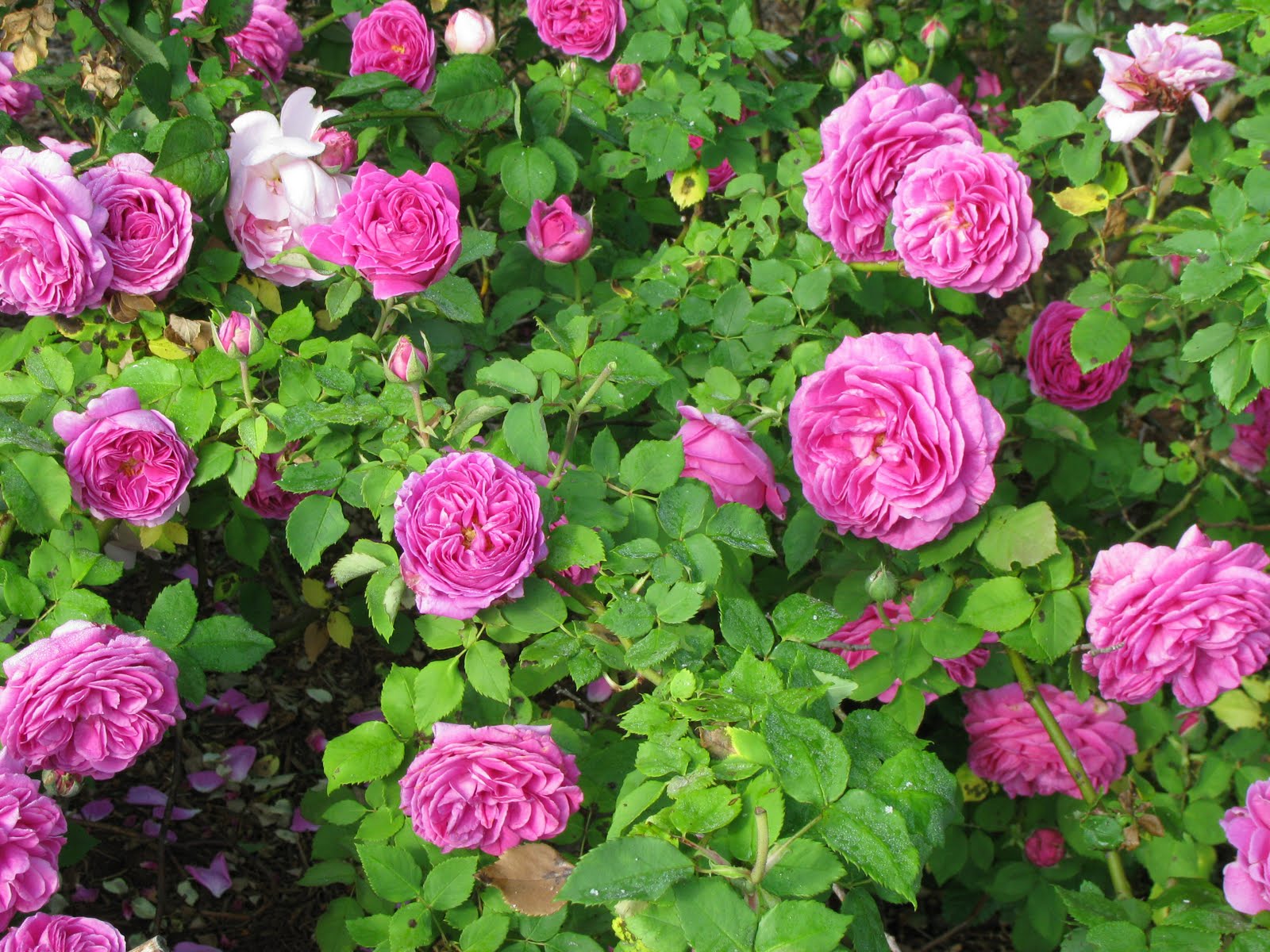
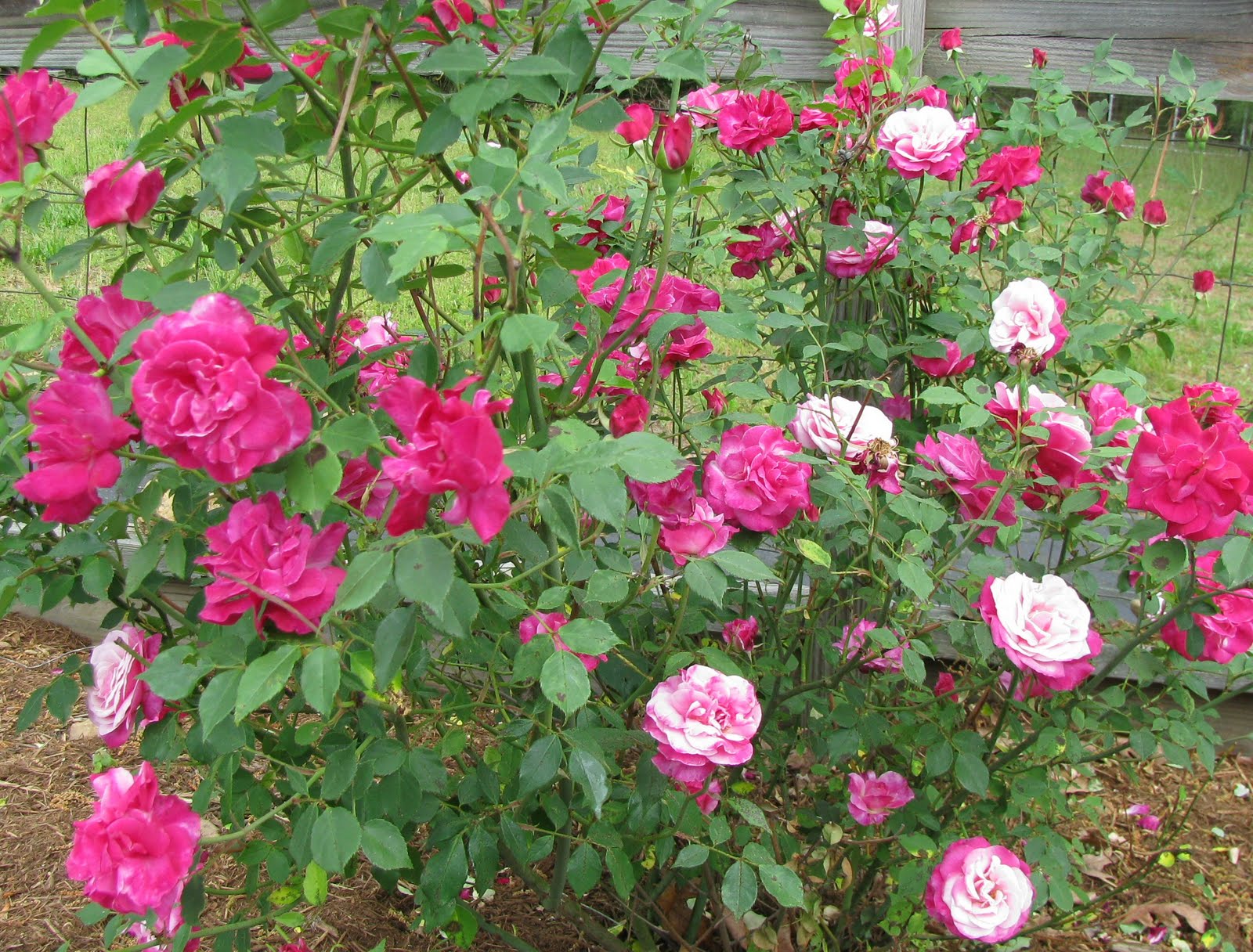
Hot Pink Madame Isaac Pereire is a Bourbon rose and smells heavenly! She will bloom off and on all summer.

I call this rose Dorsey in honor of the person’s home where I found it. I took a cutting about 10 years ago and rooted the plant in this picture. Since then, I’ve taken several cuttings to root and pass on to friends.

I believe this rose is more than likely Don Juan. The fragrance and flower are “classic rose”. I’ve featured the bud (far right) on our website header as it is one of the most beautiful I’ve ever seen.

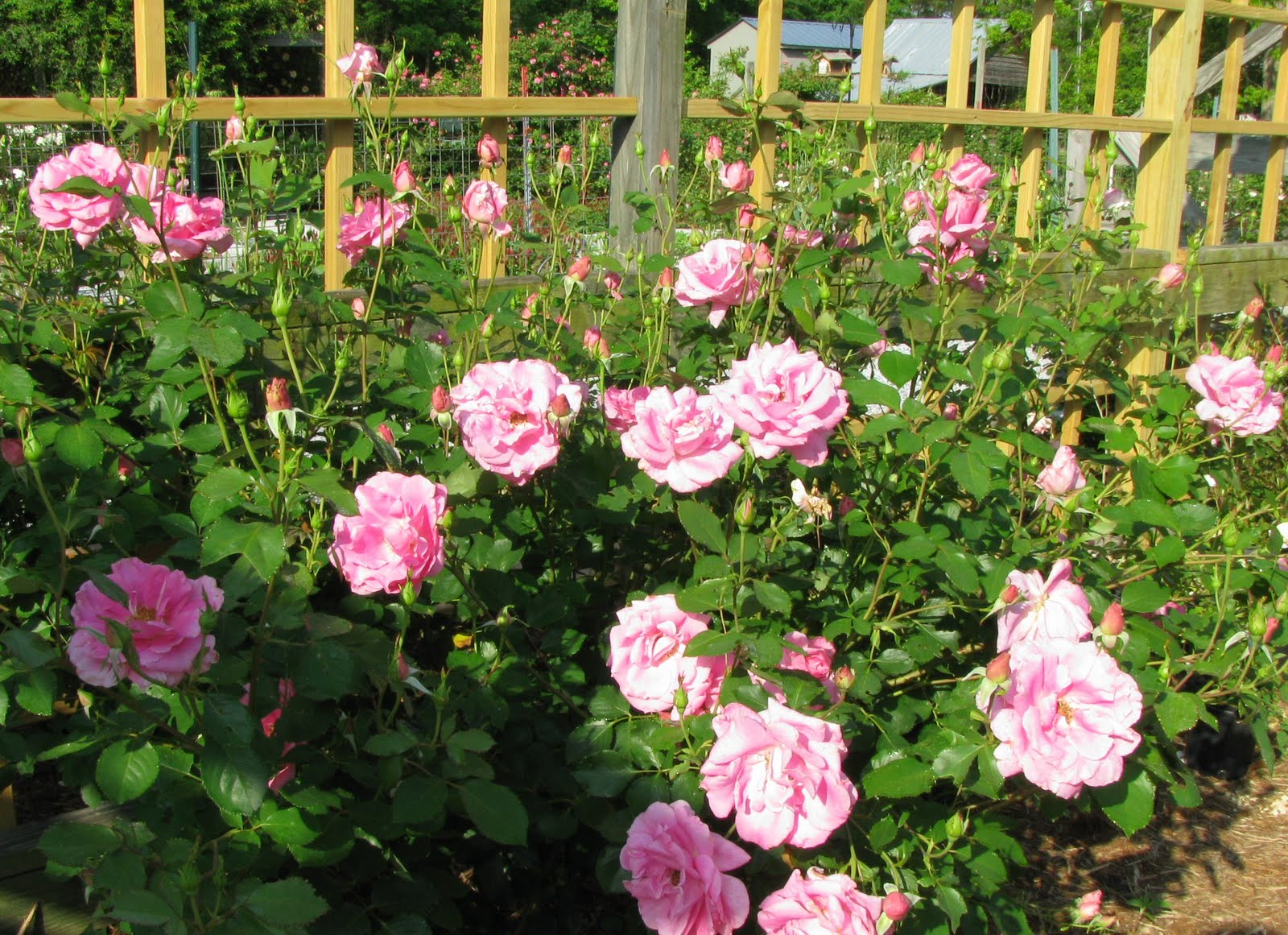
If you ask me which rose is my favorite, I’ll answer by saying they are ALL my favorites! But this year I did seem to have a special affinity for Constance Spry seen in these three pictures.

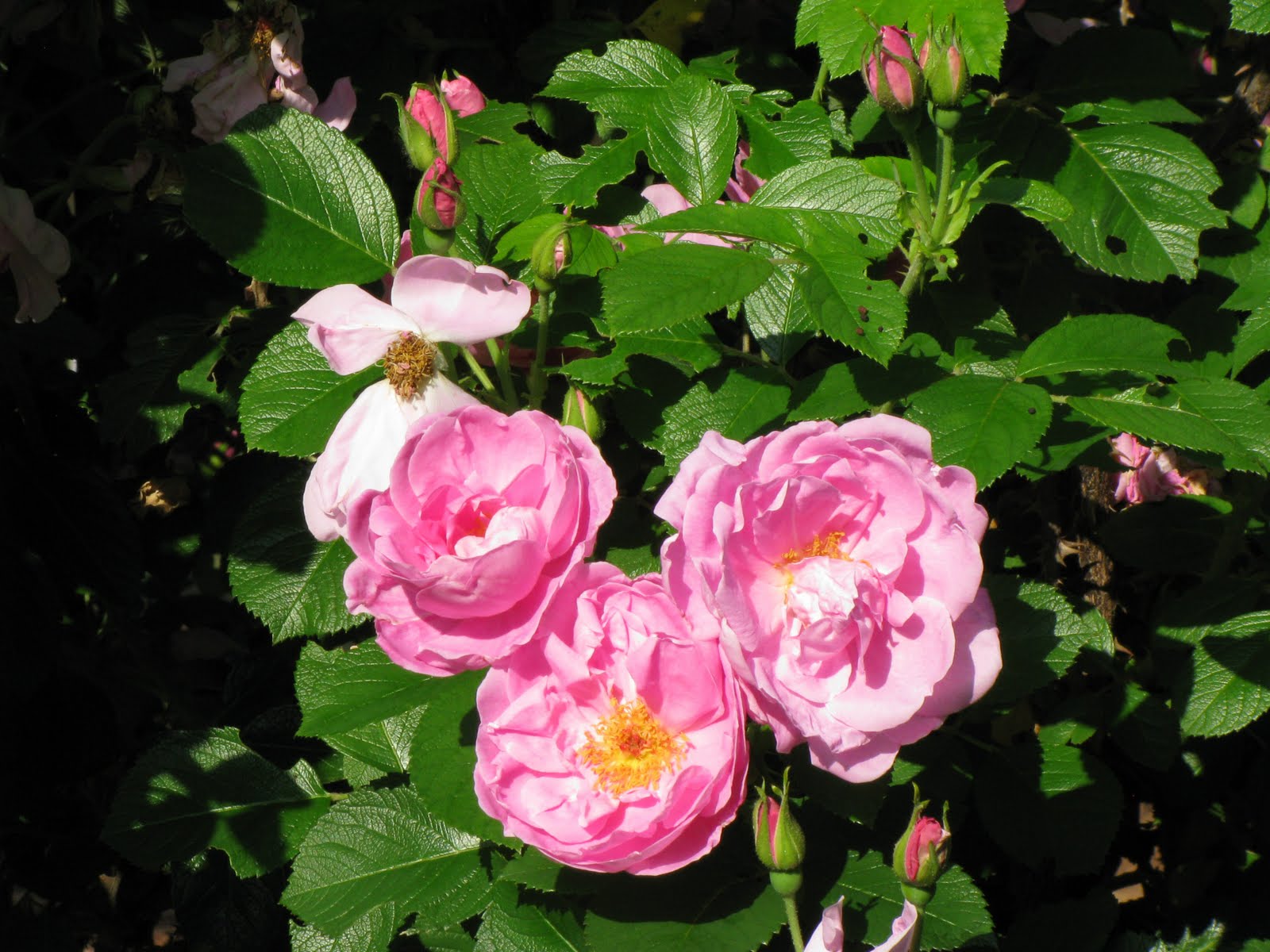
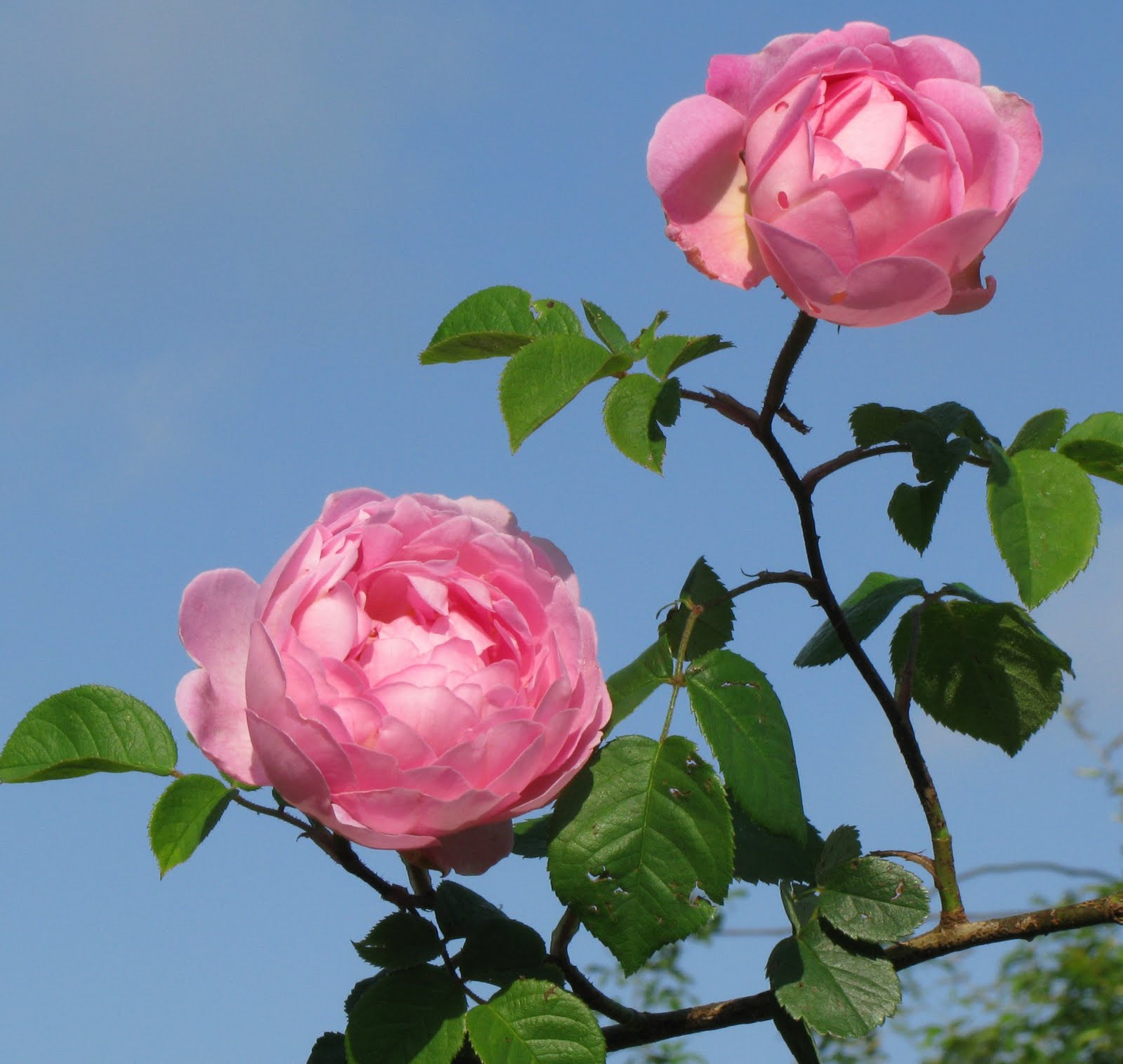
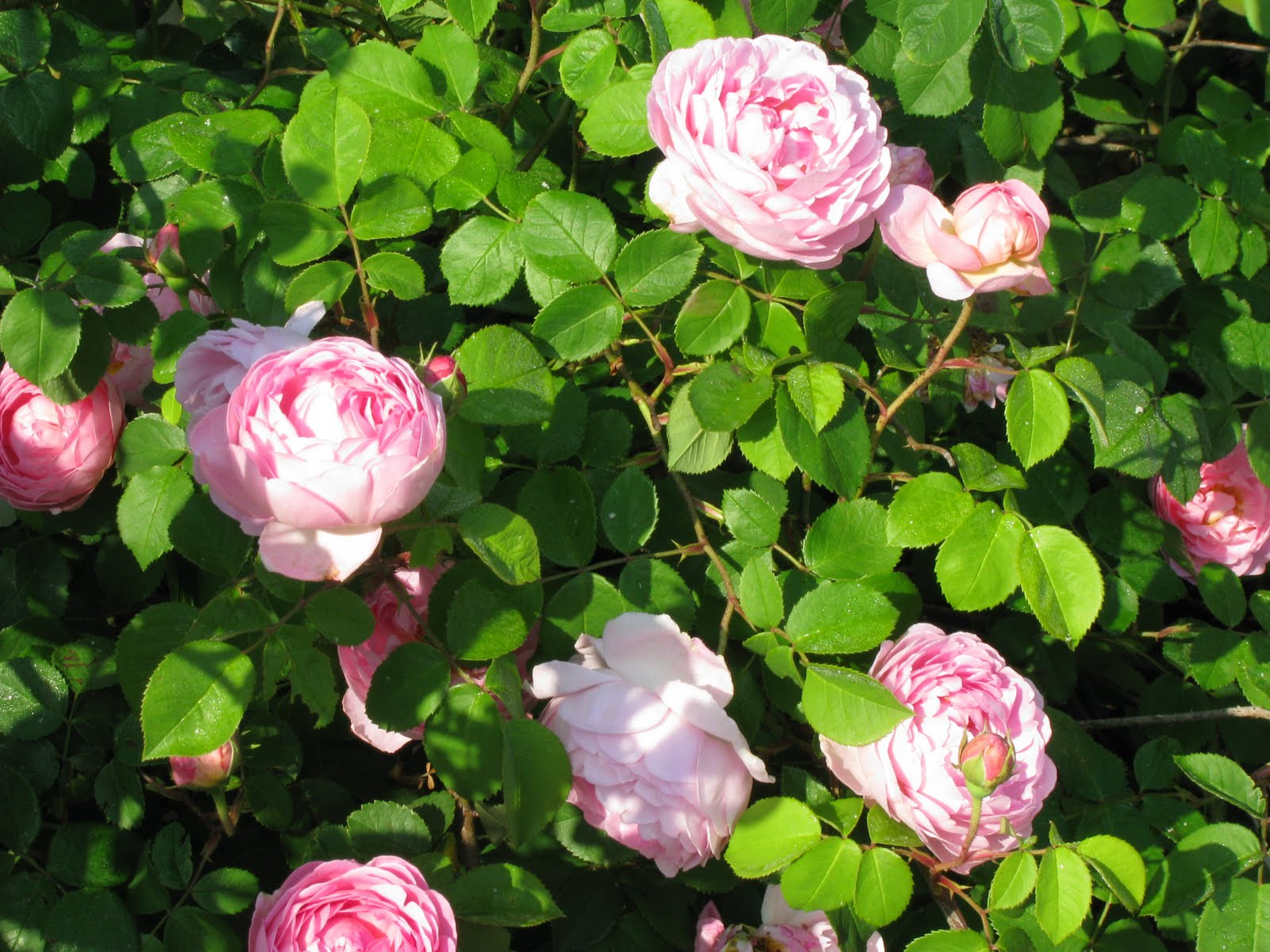
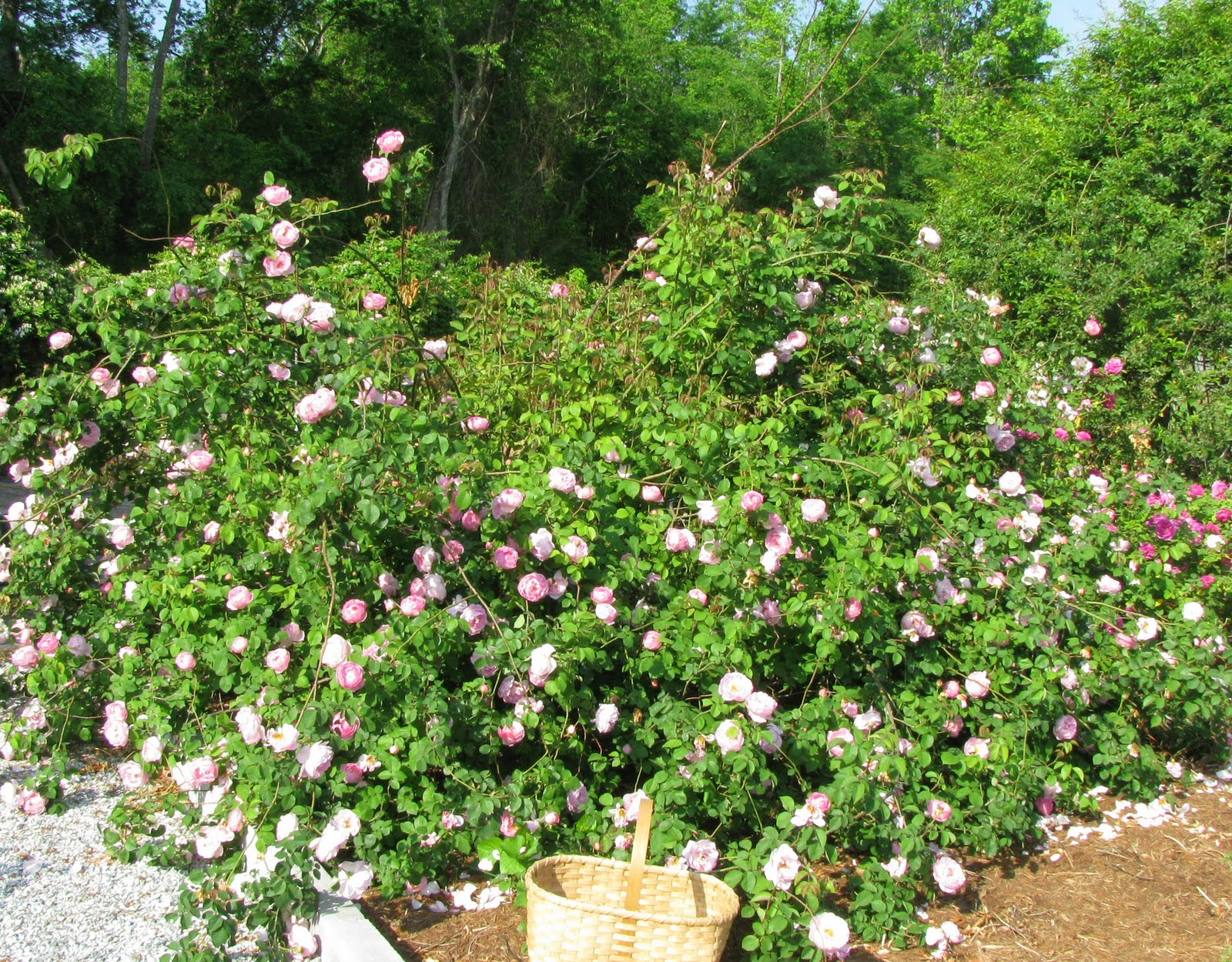
Constance Spry was the first of David Austin’s English Roses. As you can see this shrub rose is very graceful with arching branches that reach at least 10 feet wide and six feet high. Instead of pruning her back, I’ve let her dominate the garden with her lush, yet delicate beauty.

Constance Spry blooms only once in spring, but oh what a blooming! These gorgeous cup shaped, pearly pink, almost translucent blossoms produce the most intoxicating fragrance that David Austin describes as “myrrh”.

I simply could not get enough of Constance Spry this spring. Constance Spry, as well as everyone else on this page, have been transformed into our 2011 Rose Hydrosol. As you can see from my basket in front of Constance Spry, I took one last picture of her glorious bloom prior to harvesting her blossoms.

Our big Belinda rose is the show stopper whenever she blooms. Belinda is a Hybrid Musk with one big bloom in Spring. She will bloom a bit off and on throughout the summer, but not the big Spring Show as you see here. The bees love her and there is a constant buzz when she is in bloom.

Well, that ends our 2011 Rose Garden Tour at Stoney Hill Farm! I hope you have enjoyed it!

Back soon with more from The Herbarie – new products and interesting information. Oh, and please be sure to take advantage of our Rose Hydrosol Spring Sale!

Love and Best Wishes for Beautiful Blooming!

Angie

Posted in Musings From Stoney Hill Farm | 1 Comment

Early Spring 2011!

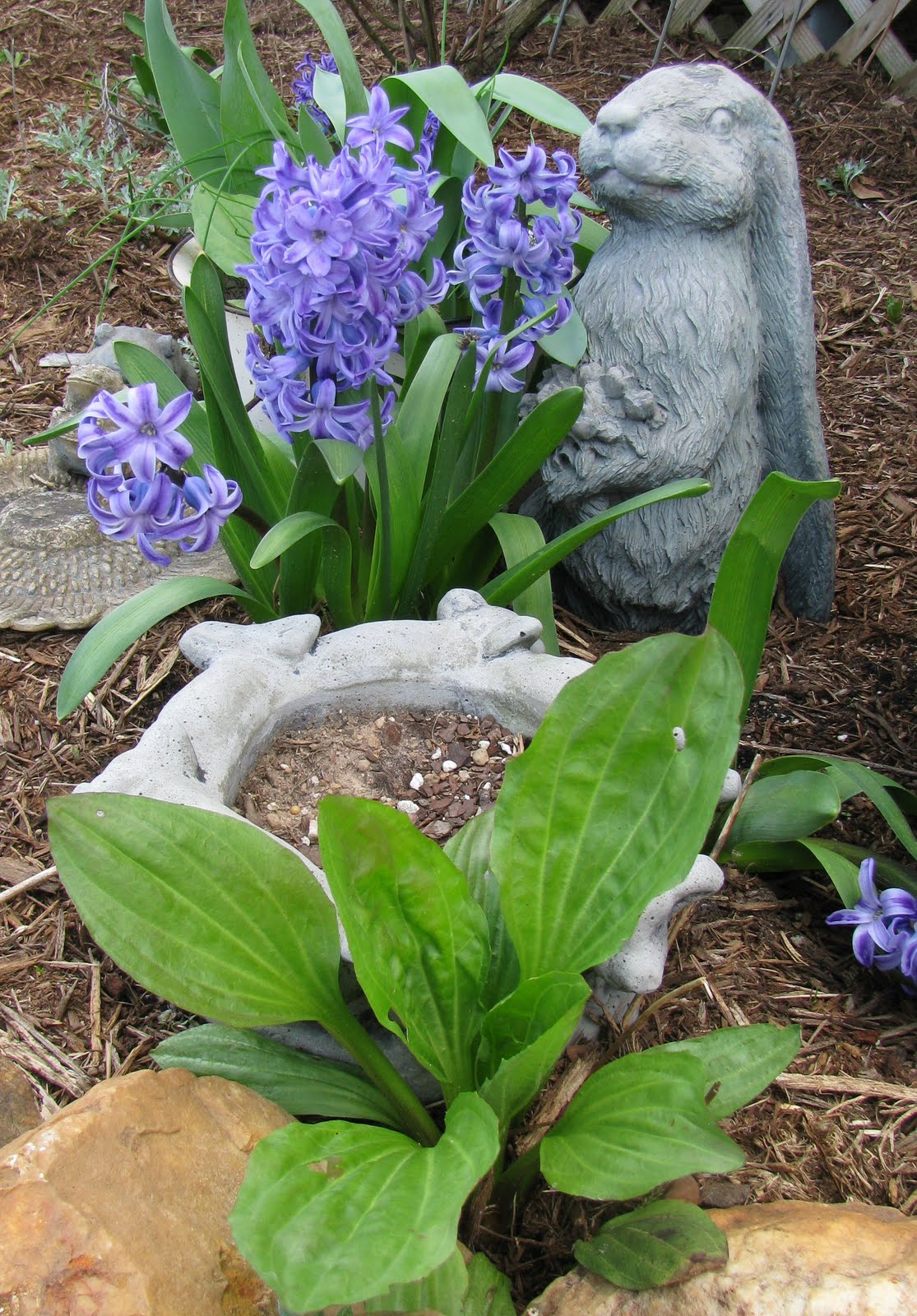
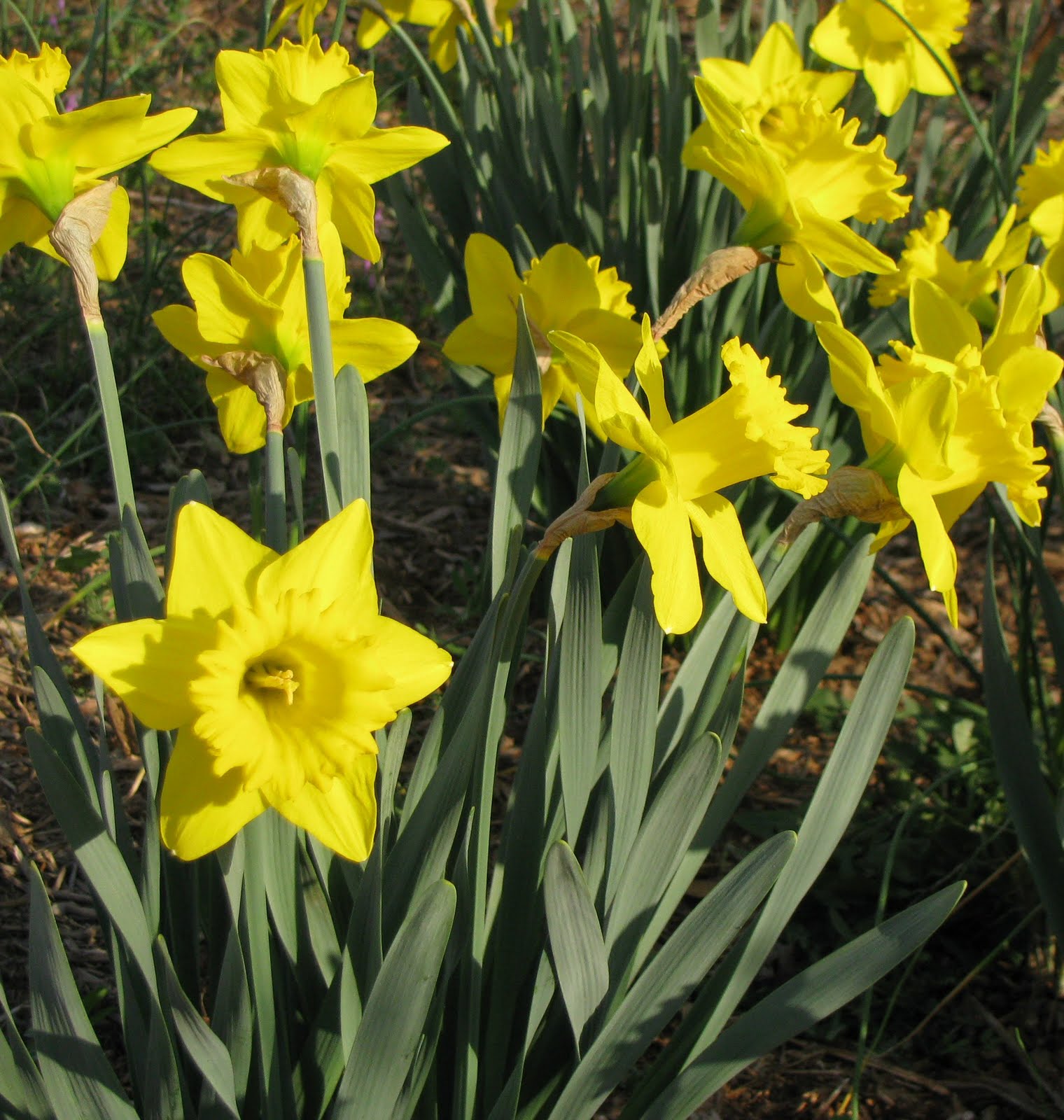
After the snow and ice in January, we now have a beautiful early Spring! The hyacinths and daffodils have bloomed, the fresh green leaves of Plantain have emerged and the Roses will soon be blooming!

Our huge Lady Banks roses are in bud and ready to bloom in a week or so. The other roses will bloom in late April and early May. What a wonderful time of year!

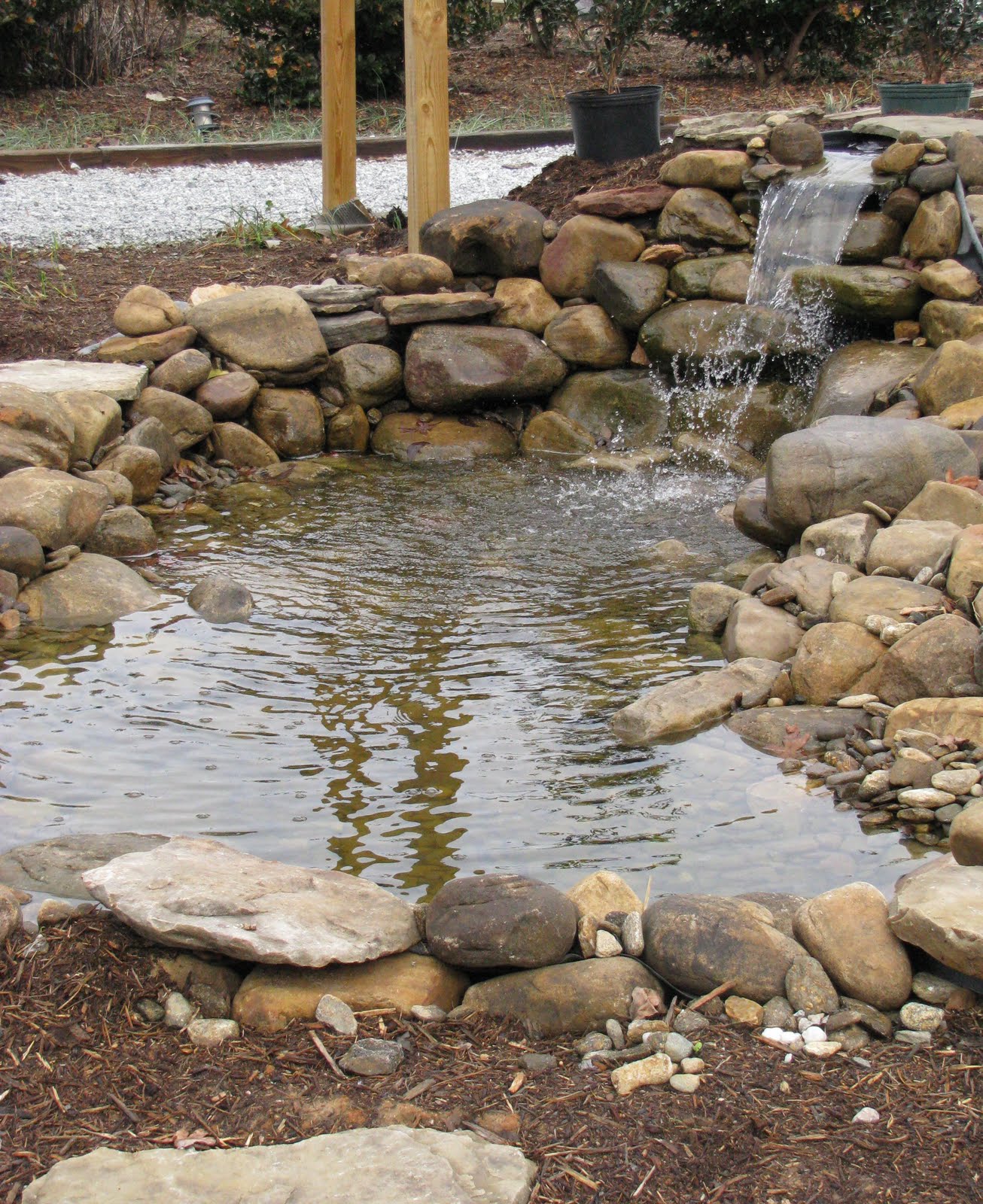
I’ve been busy as usual this winter. So much to do, so little time! We have almost completed our Kiwi garden bed with the river rock pond and water fall. I’ve planted Camellia sasanquas everywhere! In between the rocks of the water garden, I’ve planted Thyme and Lavender and a few succulents and they smell so good! In April, I will finish this garden bed by planting small rose bushes among the Sasanquas and water plants in the pond. I’ll be sure to share pictures once it’s completed!

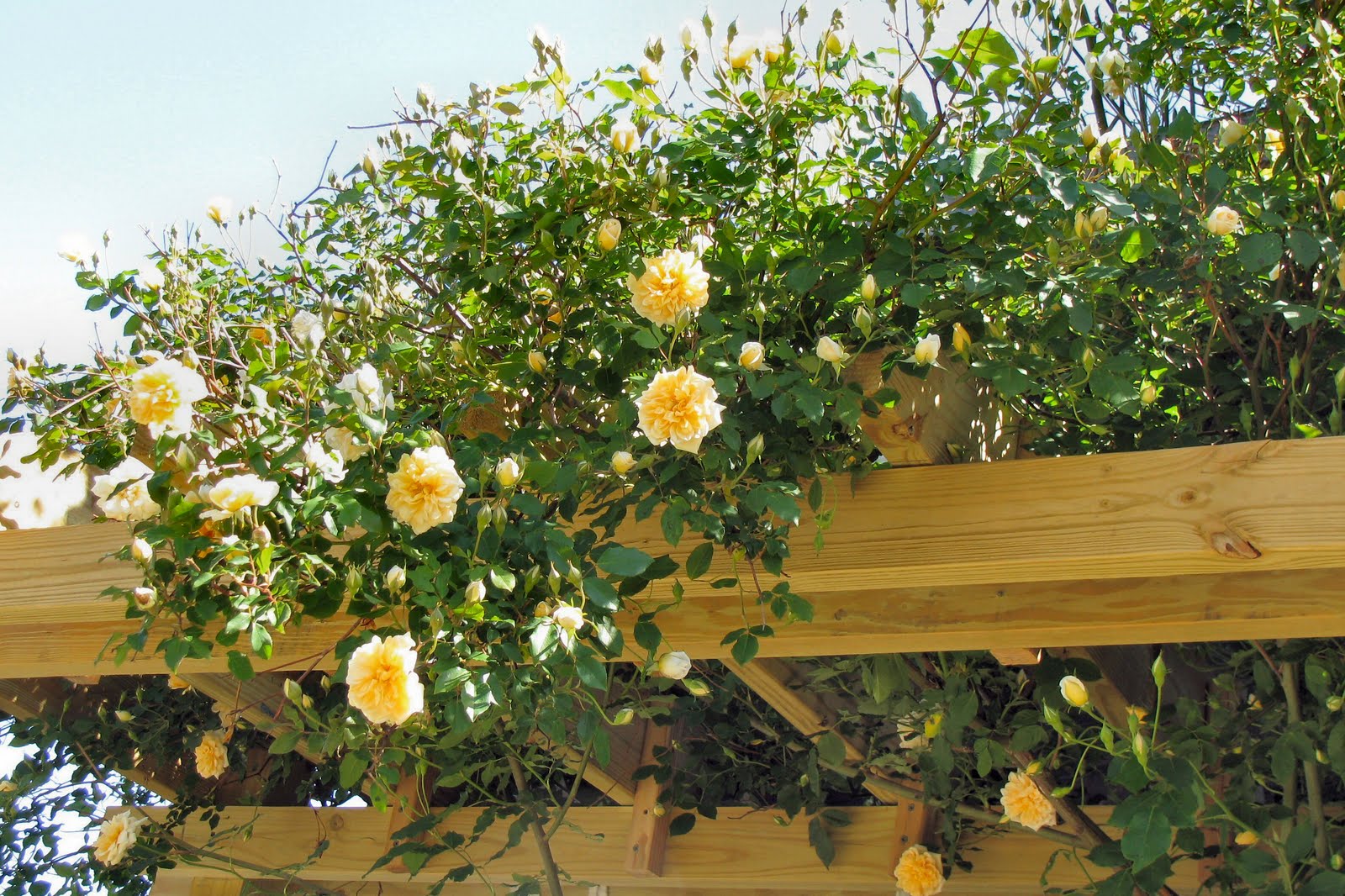
I’ve also reworked my Secret Garden to include pea gravel paths, paver designs, and a new pergola. The winter sun felt good as we sat under the pergola watching the birds at the feeders and listening to the water fall sounds from the Kiwi garden. The pergola was built for the new Reve d’Or rose that will be planted in a few weeks. I can imagine the sunrise colored Reve d’Or covering the pergola in a few years to provide us with shade in summer and a heavenly fragrance and beauty.

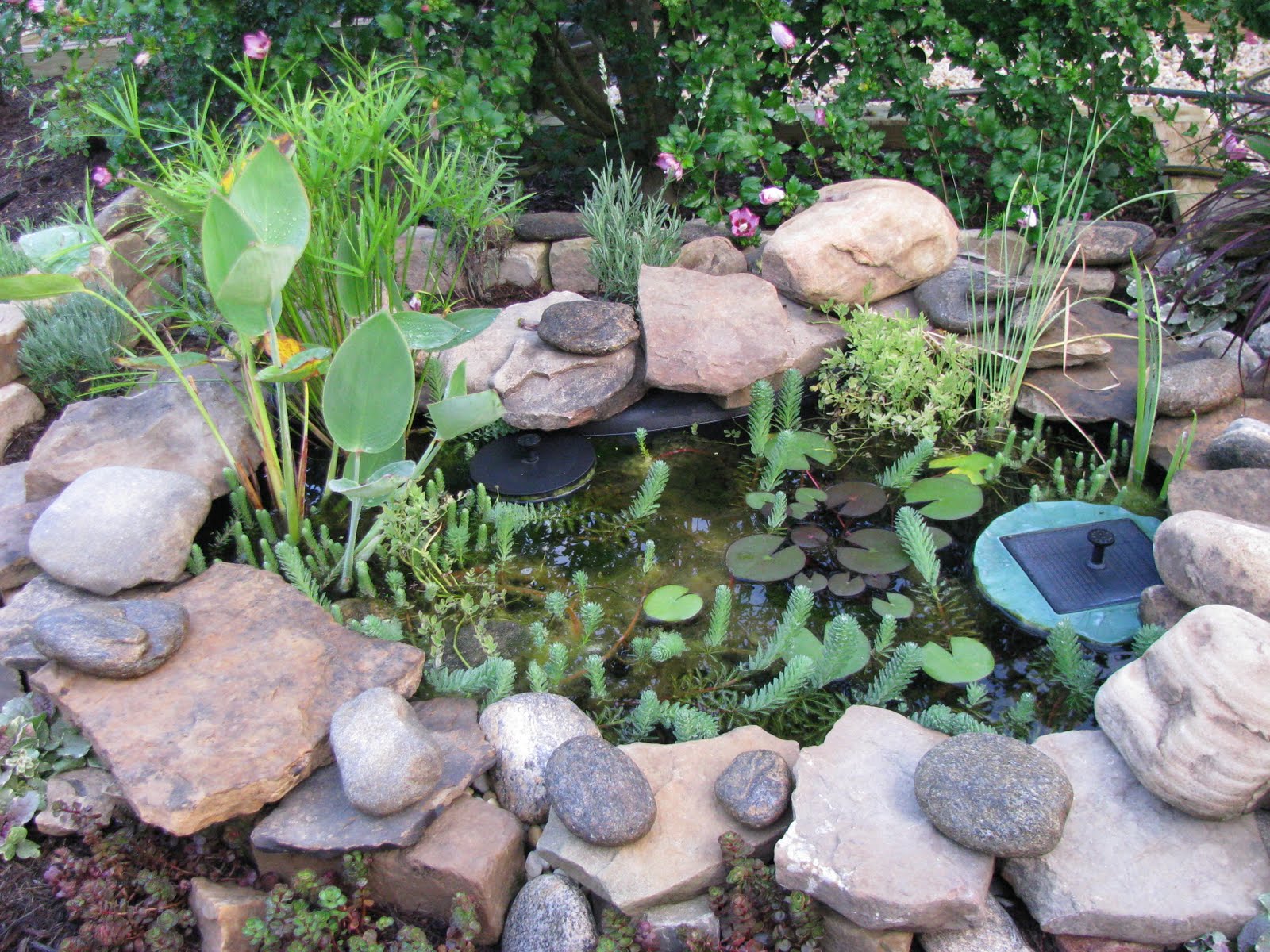
My next project is the new garden room behind my Secret Garden. In addition to the two new pergolas, I plan to create a small terraced bed with a small pond for water lilies. I’ll use more Camellia sasanquas and, of course, roses.

I’ve planted sugar peas and snow peas this week and am looking forward to our asparagus which will be sending up stalks very soon. Asparagus is so delicious when picked fresh from the garden. I should be starting seeds for tomato and pepper and eggplant inside, but just haven’t done it yet. Maybe next week I’ll get to it. I want these plants to be ready to put into the garden in April or early May.

We also need to complete the paperwork for our USDA NOP Organic Farm Certification. It’s a mountain of paperwork and record keeping, but hopefully we will be able to find the time very soon. We should be able to meet the criteria with no problem since we have been adhering to the practices for quite some time. It would be fun to be able to sell our rose products and other botanicals as NOP certified!

Spending time outside and in my garden brings joy to my heart and soul.

*******************************************************************************************************
From The Herbarie Lab

As much as I love my garden and being outside, I also love working in my lab! Today I will be distilling chamomile hydrosol and look forward to the gentle sweet scent. While distilling, I will likely make myself some herbal tea – maybe dandelion with lemon balm and mint – perhaps some Rosemary? My Rosemary is blooming and very beautiful. Rosemary grows well here and I’ve planted it everywhere. Earlier this week, I distilled some of our aromatic Rosemary Hydrosol which is excellent for hair care or skin care. Soon, the Melissa will be lush and full and ready for harvest for our skin and hair care botanical extracts and hydrosol.

As anyone can tell from previous blogs, I am fascinated with microbiology in general and especially interested in using it to our advantage for cosmetics and toiletries. It’s such a pleasure to work with Active Micro Technology and be a part of their cutting edge technology. They have developed techniques to combine the performance of botanical extracts and fermentation products with the natural defense mechanisms employed by microorganisms. The Active Micro Technology line of natural antimicrobials offers cosmetic formulators excellent alternatives to older, traditional cosmetic preservatives.

At The Herbarie, we currently distribute Aspen Bark Extract, Aloe Advanced Leucidal, and Leucidal Liquid. I’ve worked extensively with Leucidal Liquid and have found it to have excellent antimicrobial efficacy in many of my formulations. The microbiology testing from Botanical Olive Natural Lotion May 2011 batch still look very good. Results have come back
with <1 APC and <10 yeast/mold. The 2009 Natramulsion formula sample still yields the same results. I typically use Leucidal Liquid as the primary antimicrobial, but also include Rosemary Antioxidant CO2 Extract as well as essential oils in my formulas. I'm considering a switch to Leucidal Liquid for some of our hydrosols and other botanical products. The Aloe Advanced Leucidal utilizes aloe vera and the fermentation process to offer traditonal skin care benefits and antimicrobial characteristics. The only drawback is incompatibility with some materials such as XanThix, Natramulse, Olivem 1000 and also Sugarmulse. Aloe Advanced Leucidal is compatible in Polawax or EmBlend CA 20 formulas as well as in BTMS Conditioning Emulsifier (cationic) formulas. Aloe Advanced Leucidal seems to disrupt the emulsion structure of Olivem 1000 and also Sugarmulse. Anionics (XanThix and Natramulse) also seem to be a problem. We recommend using regular Leucidal Liquid with these materials as there are no compatibility issues. I’ve used Aloe Advanced Leucidal in toner formulas and also in formulas with BTMS with great results. I’ve also been evaluating Bamboo Advanced Leucidal in the same formulas and will likely decide to offer it as well. For those who are interested, I’d be happy to discuss these products – just send me an email: ProductAssistance@theherbarie.com.

  • More New Products Coming Soon!

Avena Oat Extract is an aqueous product that is made from the green oat straw of Avena sativa. Green oat straw contains silicic acid, flavones, triterpenoid saponins, carotenoids and is soothing to dry, flaky, damaged, and itchy skin. Avena Oat Extract is recommended for use in creams and lotions for dry or itchy skin, baby products, and products for mature skin.

–Eyeseryl Solution B is an aqueous product from Lipotec with a proven efficacy in reducing puffy under eye bags. Eyeseryl® Solution B also enhances skin elasticity, skin smoothness and shows a decongesting effect. Eyeseryl® Solution B can be incorporated in cosmetic formulations such as emulsions, gels, serums, etc. where a reduction of puffiness under the eye is desired. I’ve been using Eyeseryl® Solution B for two weeks and have already noticed a reduction in my under eye puffiness. I am using it at 5% in a simple eye cream made with BTMS Conditioning Emulsifier and plan to continue.

–Melfade PF is an aqueous solution of purified Bearberry Leaf Extract (natural source of arbutin) and a stable Vitamin C derivative (magnesium ascorbyl phosphate). Melfade PF is a product from DSM that has demonstrated good efficacy for skin lightening. In one study, Melfade PF was used at 10% for 3 months and significant skin lightening was demonstrated. As with all skin lightening agents, use of a sunscreen is recommended.
************************************************************************************* Today I am remembering Joy, my little Rufous hummer, since it’s been exactly one year since she left my garden. She continues to be a great inspiration for me.

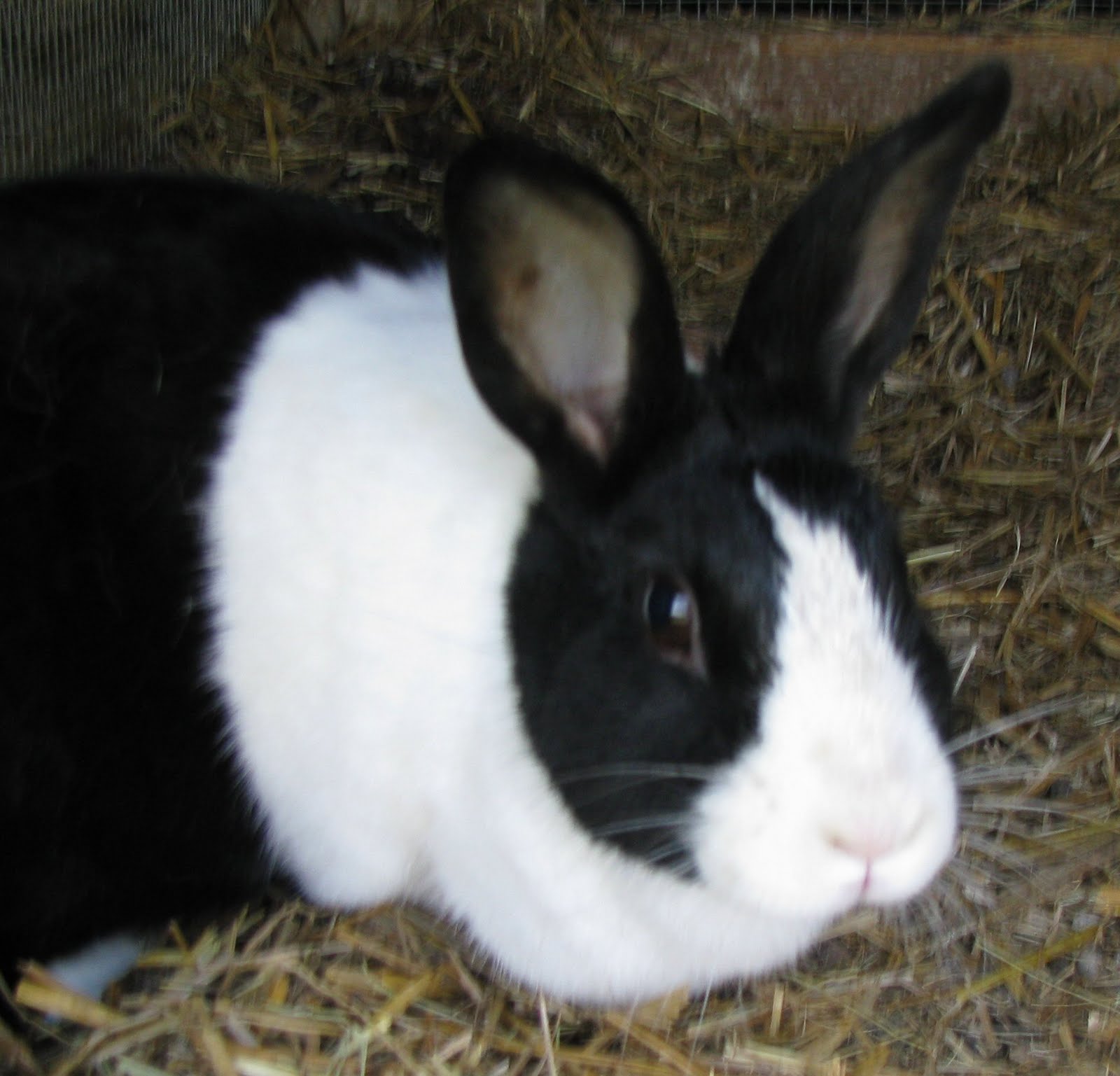
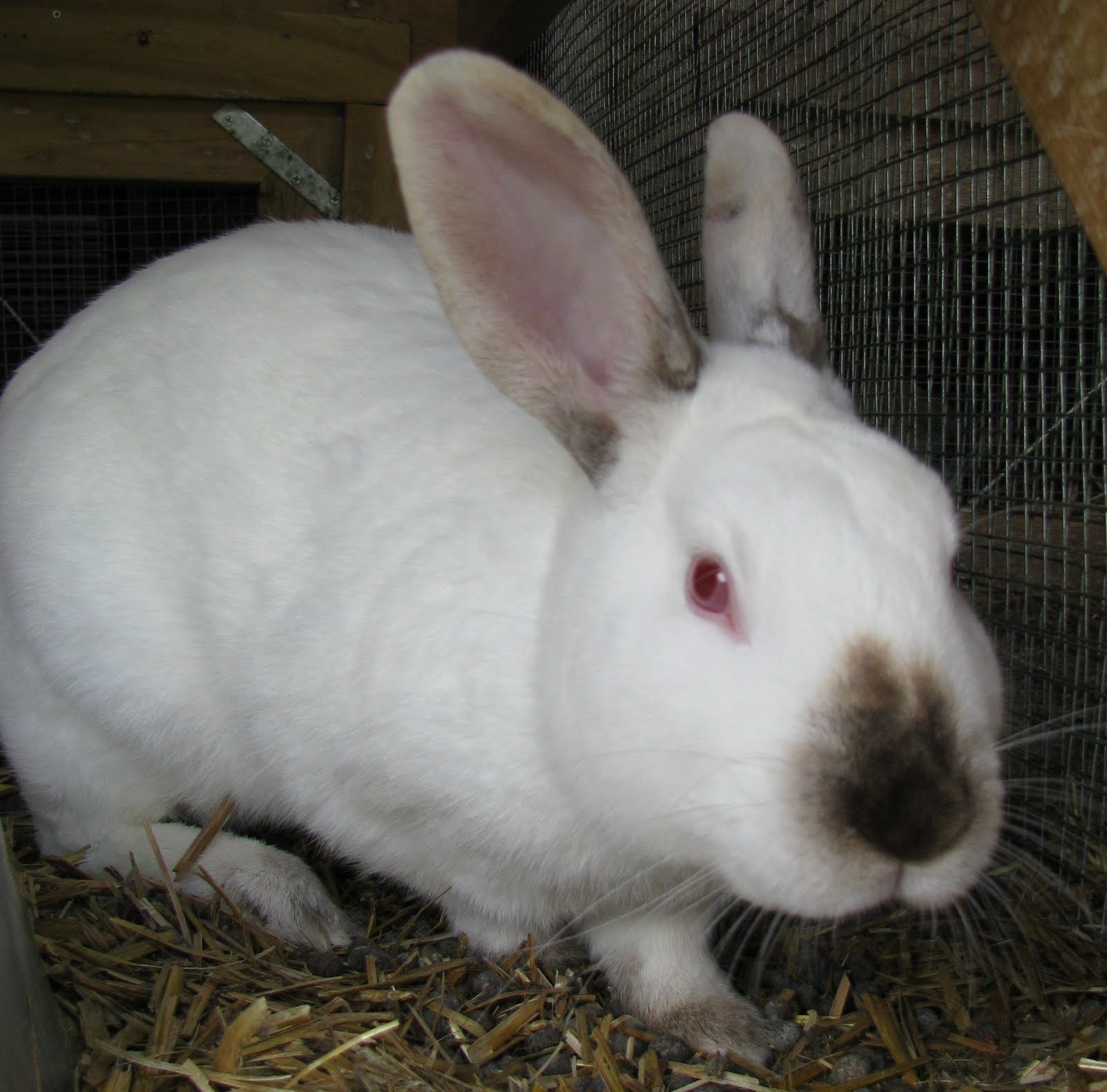
Last Fall, we had another unusual visitor to our garden – a white rabbit! We have no idea where he came from, but he seemed to want to stay close to Tinkerbell, our Dutch Belted bunny who lives under the shelter of the old smoke house. For several weeks, the white rabbit hopped all around the garden, going between Tinkerbell’s cage and the warehouse, but he would always spend the night near Tinkerbell. I began to fear for his safety since I knew he would be very easy prey for the many predators that live in the wild.

So after much deliberation, I decided that we would build a house for him. So, we named him Peter Pan and he now lives beside Tinkerbell and seems very happy.

Hippity Hoppity Happy Early Spring from me and the critters at Stoney Hill Farm!

Angie

Posted in Musings From Stoney Hill Farm | 1 Comment

Happy New Year – 2011!!

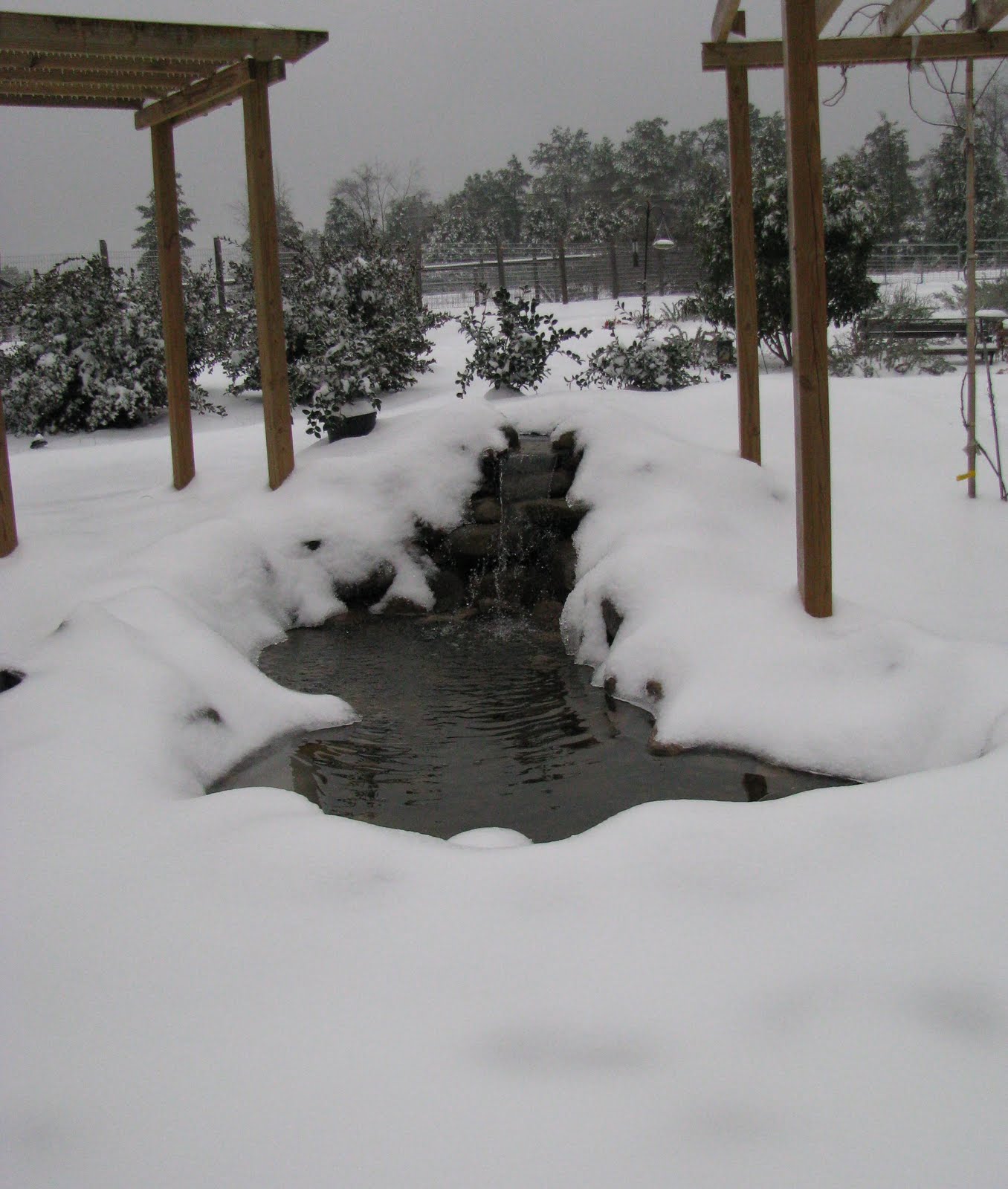
During our holiday break, I was so happy to be able to spend time walking in the woods and also working in the garden. As part of the reconstruction of my Secret Garden and big rose and vegetable garden, we are building several pergolas and trellises and privacy screens. I love having roses and other plants growing on pergolas and trellises! They are beautiful and also provide a nice shady spot during our hot summers. Our hardy kiwi are planted on three pergolas in our center garden bed and we have finally built our pond with waterfall!

I’m planning to use beautiful evergreen Camellia sasanqua to create garden “rooms” with paths to tie everything together. In Spring, we’ll add water lilies and other plants to our little garden pond. Hopefully this summer the Hardy Kiwi will cover the new pergolas to give us a lush shade.

We’ve taken advantage of winter dormancy to transplant several roses and other plants to areas where they will be able to grow to their full potential. These winter projects are so much fun!

**********************************************************************

But now it’s great to be back to work after a nice, relaxing holiday with family and friends! I’m pleased to begin 2011 with a superb staff including Andy, Alden, Earl, Jean, Wanda and of course me. Everyone has been hard at work processing orders that came in over the break and most are completed.

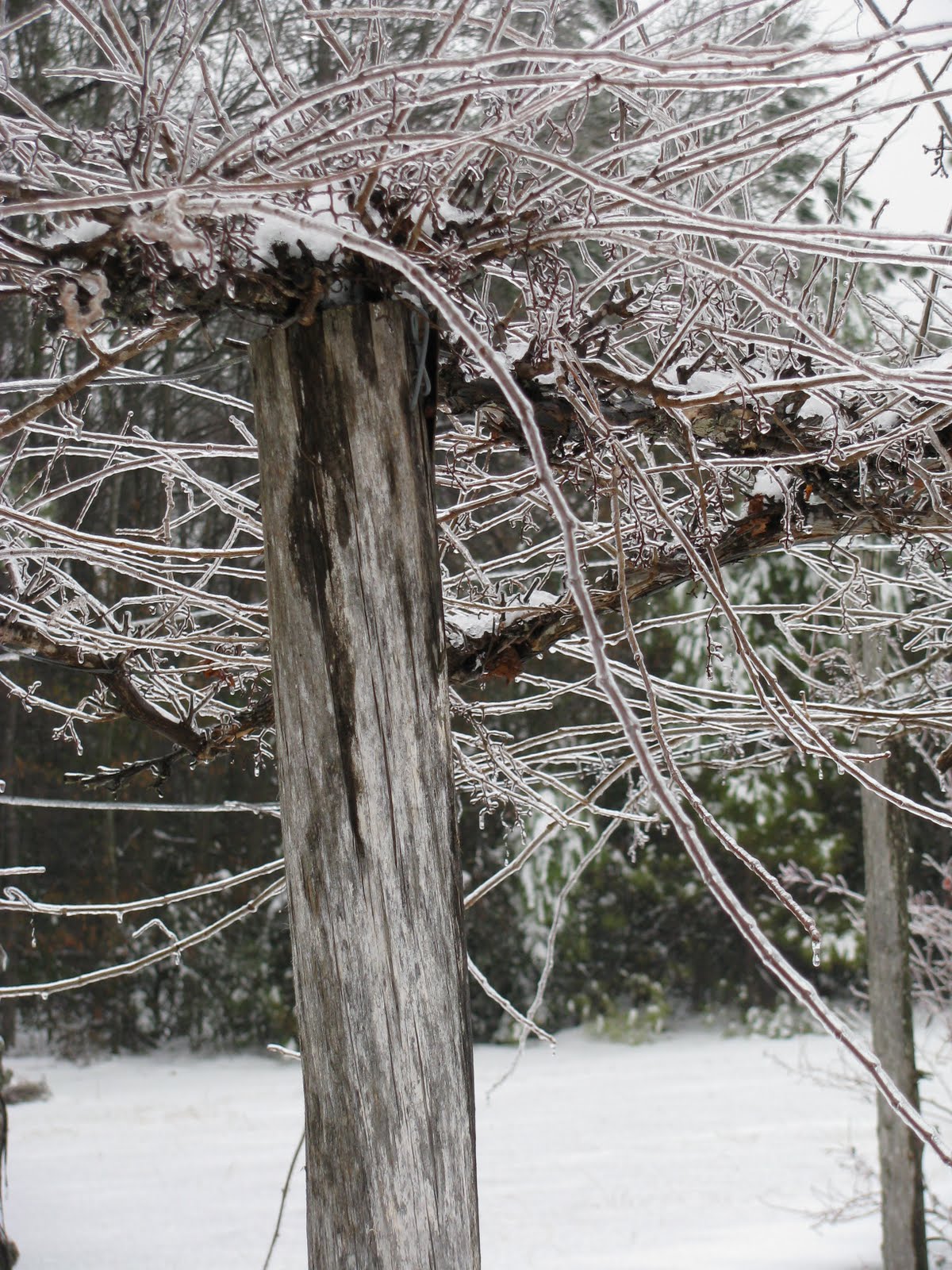
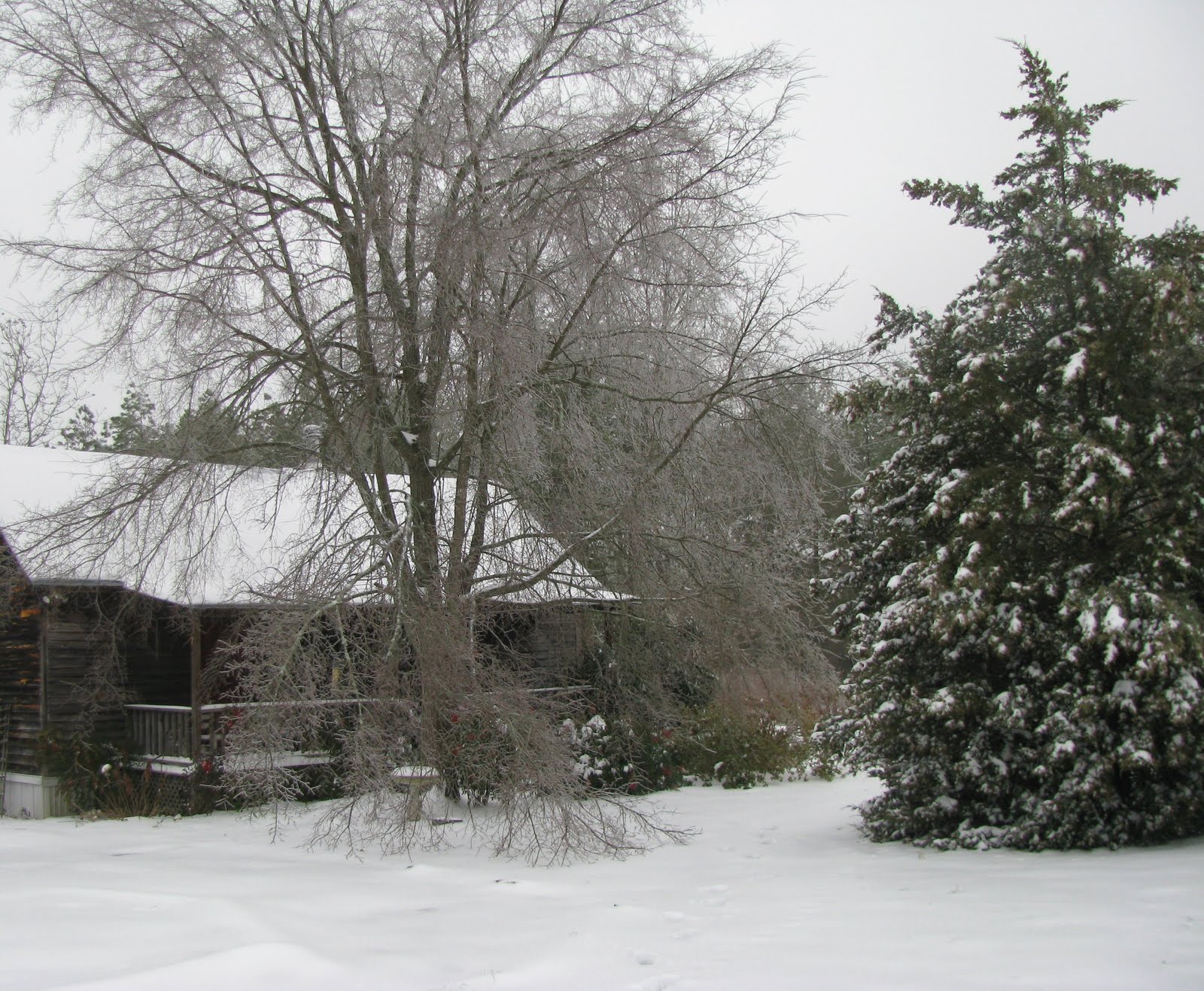
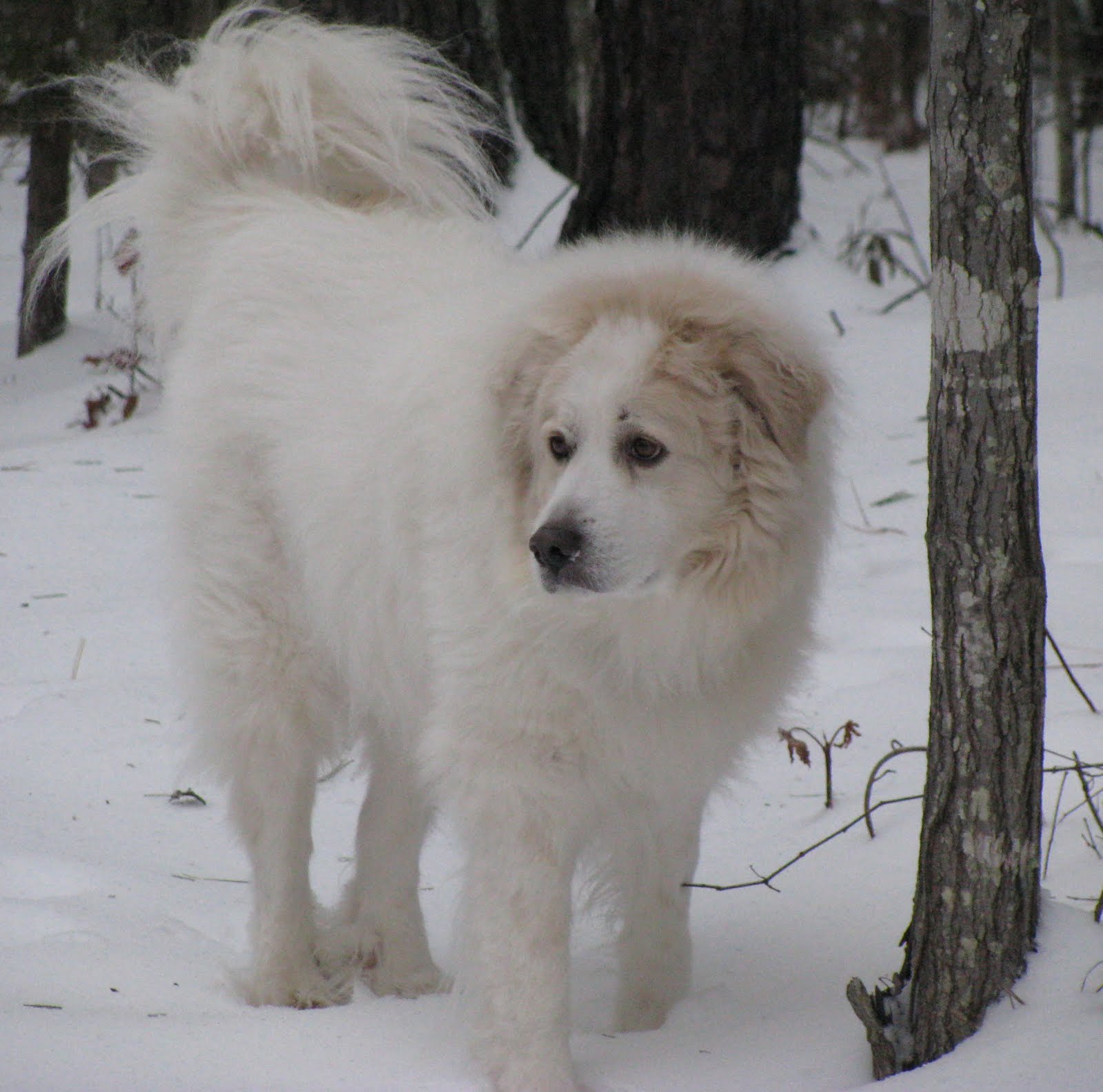
On Sunday evening, the big winter storm of the southeast gave us 6 inches of gorgeous, fluffy snow! Here’s a picture of little Rose Cottage here on the farm. Earl and Sally and I had fun playing outside and walking in the woods!

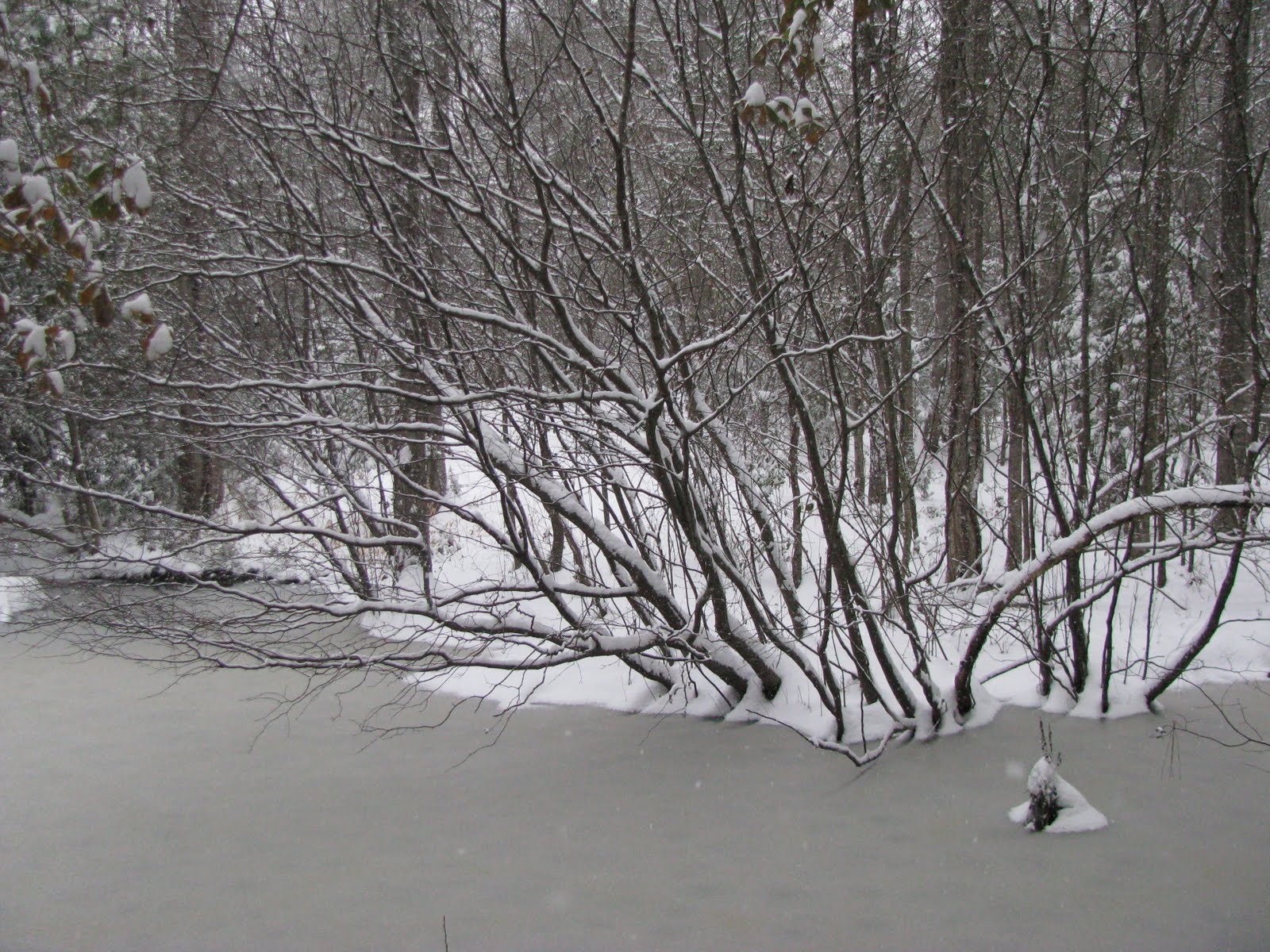
It rarely snows in our area and I can’t remember having as much as 6 inches in quite a long time. On Monday, the snow turned to sleet and we ended up with 1/2 inch of ice on top of the snow!

Snowy and icy weather will bring most things in the south to a halt – especially in rural areas. Since we aren’t equipped to handle this much snow and ice, most schools and businesses simply close. Today is Wednesday and most schools and businesses are still closed. While the interstate is somewhat clear, it’s still not really safe to drive. Several of our vendors in Atlanta and Charlotte were closed yesterday because employees could not get in to work.

Stoney Hill Farm is in a very rural area about 4 miles outside of a little town called Prosperity. The back roads in our neck of the woods will never see a snow plow so we have to do the best we can. As one might imagine, this storm has had an impact on our business as well. Earl and I have been working in the warehouse as usual, but other staff could not make it in on Monday. UPS couldn’t make it out here either. On Tuesday, Andy and Wanda were able to make it in to work, but UPS still could not make it out to this area. We are hoping UPS will be able to make it out today which is Wednesday. So, this has delayed shipping for all orders that were placed since last Thursday. We are hoping to have our shipping be back on schedule by Thursday or Friday.

Stay Warm and I’ll post more later!

Best Wishes for a Healthy, Happy and Prosperous New Year!

Angie


Posted in Musings From Stoney Hill Farm | 2 Comments

Fall Lessons and Natural Antimicrobials

As summer has come to a close and winter is just around the corner, it seems natural to think about where we’ve been and where we want to go and how life is always changing. It’s a time for reaping and sowing, cleaning out the old, and planning for new.
I see that our trees are changing and preparing for winter dormancy. The leaves are shades of gold, orange, red and brown and are falling to the Earth. I like to think about how the leaves will enrich the soil and the roots will grow deep for winter nourishment.

My beloved Zinnias are straggledy haggledy this time of year, but are still valiantly blooming and sending out thousands of seeds. I’ve pulled out many past-their-prime Zinnias to make way for the gorgeous Sansanqua blooms, but have left some of the still brilliant flowers for the bees and butterflies who love them.

Yesterday in the garden, I saw several beautiful Monarch and Swallowtail butterflies! They were moving from Zinnia to Zinnia in the late afternoon sunshine. I’m thinking that soon they will also be preparing for winter, but how nice to enjoy those blossoms while they can! It’s sad to know all the Zinnia flowers will be gone by the first frost, but it makes me happy to think about their rebirth in the Spring! I sowed the first tiny packet of Zinnia seeds in Spring of 1997. For many years I saved the seeds in Fall for careful sowing the following Spring. But over time, as I’ve developed a better understanding and faith in the process of life, the Zinnias have beautifully and bountifully sown themselves each year! I look forward to meeting the 14th generation in 2011 and together we will decide where to grow!

Last Winter we began renovating the gardens and business facilities and have made good progress, but there is still so much to be done! Hind sight being 20/20, back when we bought the property in 1996, I wish we would have developed a master design including the business facilities, gardens, our home, woods, etc. But instead, we’ve done everything bit by bit, adding things here and there over the years so that we now have a bit of a hodge-podge of this and that. Also, as a former city girl with a country heart and soul, I was so thrilled to have my own special place on Earth, a place to sow seeds and plant plants, that I filled every nook and cranny with TOO MUCH! So for the past year, I’ve been trying to rethink and rework the gardens and buildings to create spaces that are both enjoyable and have good functionality. The basic plan now is to work with what we have, while removing, refining and restructuring as needed to make the best of it!

We always have a lot going on at Stoney Hill Farm and The Herbarie! During the week, Earl, Jean, Andy and I can usually be found in the warehouse, office and/or processing area. We process over 40 of our own botanical extracts, complexes, hydrosols and other ingredients that we sell at The Herbarie. Our inventory includes approximately 400+ ingredients and products that we distribute from other manufacturers. In addition, our Formulary includes many sample formulas which demonstrate how to utilize our ingredients. The previous blog included three of my most recent formulas which demonstrated how to utilize Olivem 1000, Oliwax, Oliwax LC, and Olive Oil PEG 7 Esters. I very much enjoy working in the lab and had hoped to created new formulas for this Fall blog, but with the beautiful, cool weather I’ve been spending as much time as possible outside. So, instead of working in my lab on weekends, I’ve been in the garden. But I do want to discuss some important points regarding my Botanical Olive Natural Lotion.

Botanical Olive Natural Lotion

In a previous blog, I shared my formula for Botanical Olive Natural Lotion. This formula utilizes Olivem 1000 as the primary emulsifier, with Oliwax and XanThix to stabilize and enhance overall feel and texture. Botanical Olive Natural Lotion will be a very thick lotion or moderately thick cream. I’ve packaged it as a lotion with a pump dispenser and also as a cream in a jar. Either way, this formula makes a lovely emulsion!

It’s also very important to note the primary antimicrobial in this formula is natural sourced Leucidal Liquid. Leucidal Liquid is water soluble, compatible with most ingredients, and is odorless and colorless. In fact, the entire preservative system in this formula consists of natural source, plant based antimicrobials. We have been testing our batch sample over time since May and I am absolutely thrilled to report that our most recent tests are still <10 cfu/gram for yeast/ mold and <1 cfu/gram for bacteria! With these excellent test results at the six month point, I can recommend this formula and preservative system to our clients with reasonable confidence. We will continue to test this sample for at least one year or may choose to have the formula challenge tested. And as always, we encourage companies to conduct their own stability and preservative efficacy testing. Here’s the formula: Botanical Olive Natural Lotion Part A or Oil Phase
5.0% = 25 grams Olivem 1000
2.0% = 10 grams Oliwax
8.0% = 40 grams Cupuacu Butter
5.0% = 25 grams Organic Golden Jojoba Oil
3.0% = 15 grams Olive Squalane
0.4% = 2 grams XanThix

Part B or Water Phase
65.95% = 329.75 Distilled Water
5.0% = 25 grams Symglucan

Part C or Cooldown Phase
2.0% = 10 grams Chia Seed CO2
0.05% = 0.25 grams Rosemary CO2 Extract
0.5% = 2.5 grams Lavender CO2 Extract
0.5% = 2.5 grams Bergamot FCF EO
0.5% = 2.5 grams Rose Geranium EO
0.1% = 0.5 grams Ylang Ylang EO
2.0% = 10 grams Leucidal Liquid

Total: 100% = 500 grams

Part A: Weigh XanThix and set aside. Combine remainder of ingredients and heat to 175F. Add XanThix to heated mixture and stir gently.
Part B: Combine ingredients and heat to 175F. Add Part B to A with high shear mixing. Cool to 50C/122F (or less)
Part C: Add ingredients, mix well until completely cool.

I am always asked about substitutions and changes to formulas. When substitutions are used and formulas do not turn out as expected I am asked why. Of course, when changes are made, the outcome will be different. Some changes or substitutions will have a more significant impact than others. Some changes may be for the better or some could take it in the wrong direction. I recommend first making the formula as it is written, then tweak it to suit preferences in subsequent experiments.

Natural and Plant Based Preservatives

Nowadays, most customers are looking for less aggressive preservatives and “natural preservatives”. Unfortunately there is no one perfect natural preservative that we can simply put into our finished formulations as an afterthought. Let me repeat: There is no one natural preservative that will work for every formula as an afterthought! However, it’s entirely possible to create a formula using natural antimicrobials to create a viable preservative system that can demonstrate efficacy in a particular formula. Notice that I often use the terms “antimicrobial” and “antioxidant” and “preservative system” instead of “preservative”. We need to move away from the idea of creating fabulous formulas only to realize at the last minute that it needs a “preservative”. Instead, we need to consider the entire formulation including a preservative system that may in fact be multifunctional as well. Creating an effective preservative system takes time and testing for each and every formulation. What works for one formulation, may not work for another. So, please make note, it’s always best to create a formula from start to finish with the preservative system in mind.

The Botanical Olive Natural Lotion contains many nutrient-rich, moisturizing and conditioning ingredients. They were carefully chosen to complement one another in various ways. Many of the ingredients are also multifunctional. For example, Rosemary Antioxidant CO2 Extract is a powerful antioxidant which will help delay the oxidation of oils. In addition, Rosemary Antioxidant CO2 Extract offers some antimicrobial activity and has skin soothing, anti-irritant characteristics. As an added plus, Rosemary Antioxidant CO2 Extract is certified organic by the USDA NOP. Now that’s one powerful, multifunctional ingredient! I also chose a blend of essential oils for their antimicrobial activity, synergy and lovely scent. Lavender Flower CO2 Extract, Rose Geranium Essential Oil, Bergamot FCF Essential Oil, and just a touch of Ylang Ylang Essential Oil provide a fresh, green-floral scent that I just adore!

Microbial Testing

When I created the Botanical Olive Natural Lotion formula in May 2010, I speculated and hoped these antimicrobials would work in synergy and prove to be a broad-spectrum preservative system with efficacy to inhibit the growth of microorganisms (bacteria, yeast, mold) and most especially pathogenic organisms such as Staphylococcus aureus, Pseudomonas species, Enterobacteriaceae and Candida albicans. But while I can speculate and hope the cream will be well preserved, the only way to know for sure is with microbial testing. There are a number of different testing procedures and methods. The standard in our industry is Challenge Testing for various microorganisms with a standardized protocol. Challenge Testing provides information about a specific formula and whether or not it will stand up to the challenge of being inoculated with specific microorganisms over a specified period of time. Challenge Testing is pass/fail and is expensive. As a viable and less expensive first step or alternative, we often recommend using Normal Usage Testing. I’ll explain how Normal Usage Testing works for us and can work for others.

We utilized Normal Usage Testing for our Botanical Olive Natural Lotion. The name speaks for itself. Since May, the product has been packaged in a jar and has “been used normally” on a routine basis. We can determine preservative system efficacy by testing the same sample (APC/yeast/mold) repeatedly with normal usage over time. The initial test results should have very low counts and will not tell us much about preservative efficacy, but will provide valuable information about Good Manufacturing Practices (GMP). The subsequent test results will tell us more about Preservative System Efficacy or how the preservative system will stand up over time.

Our Normal or Possible Usage testing includes putting unwashed fingers into the jar repeatedly and any number of things customers may do once the product is in their hands. Please note this procedure does carry some risk since there is potentially a period of time where the product could be contaminated without the user knowing it. Therefore, as part of the protocol, we recommend “normal usage” should be immediately following test results.

Here’s the way it works: After each period of “Normal or Possible Usage”, a sample from this original batch is sent to the lab for testing. Usually one ounce samples are sufficient. I opt for the following testjng schedule:

●Manufacture sample – determines GMP
●One month from manufacture date – sets baseline
â—ŹThree months from manufacture date
â—ŹSix months from manufacture date
â—ŹOne year from manufacture date

For each APC/yeast/mold sample test our goal is:
â—ŹLess than 1 cfu/gram for bacteria
â—ŹLess than 10 cfu/gram for mold and yeast
â—ŹContains no pathogenic organisms

For more information about how to proceed with microbial testing, please send me an email: support@theherbarie.com

Please note: Responsible cosmetic and toiletry businesses will be familiar with the FDA Guidelines for Cosmetics and will adhere to the FDA Good Manufacturing Guidelines (GMP).

Creating a Preservative System for Cosmetic Formulations

For excellent detailed information about preserving cosmetics and toiletries, I highly recommend David Steinberg’s “Preservatives for Cosmetics” and “Preservative Free and Self Preserving Cosmetics and Drugs – Principles and Practices” by Jon Kabara and others.

My goal for this blog is to share some very basic information that I hope will be helpful. It’s important to learn as much as possible about each and every ingredient, including antimicrobials. For example, some antimicrobials are water soluble and some are more oil soluble. Some antimicrobials are cationic and will not be compatible in anionic formulations. Some antimicrobials are not compatible with certain ingredients. Some work in synergy and others don’t.

Water Soluble Antimicrobials

Water is the substance for life and that includes microorganisms. The most effective antimicrobials will be water soluble so they can most efficiently inhibit the microorganisms in the water portion.

Water soluble antimicrobials are used in watery products that do not contain emulsifiers. Water soluble antimicrobials can also be used in emulsions. The antimicrobials in this category range from aggressive and efficient broad spectrum to very mild gentle with minimal antimicrobial activity. Some can be used as the primary or only antimicrobial in the formula, others play a supportive role and must be used in combination.

Water soluble antimicrobials that can play a primary role in the preservative system include the following:

●Germall Plus Liquid – synthetic, completely water soluble, easy to use viscous liquid, highly efficient at low percentages, broad spectrum, excellent compatibility, offers best assurance for most difficult to preserve formulations. Downside is that some formulators do not want to work with a formaldehyde donor.
●Leucidal Liquid – plant based/natural, completely water soluble, easy to use liquid, non irritating, odorless, available data demonstrates broad spectrum activity, excellent compatibility. Synergy with other antimicrobials such as Aspen Bark Extract. Downside is lack of data.
●Cosmocil CQ – synthetic, completely water soluble, non irritating and very gentle, can be used near mucous membranes, our test results demonstrate excellent efficacy when used in all water formulations as well as in cationic emulsions. Downside is incompatibility with anionics.
●Aspen Bark Extract – plant based/natural, available data demonstrates broad spectrum antimicrobial activity, good compatibility, synergy with other antimicrobials such as Leucidal Liquid. Downside is lack of available data. Powdered form is not as easy to use as a liquid.
●Optiphen ND – synthetic, water dispersible, but not completely water soluble and works best with an emulsifier or surfactant. Downside is that it will not be a good choice for formulations with a pH greater than 5.5.

Here are a few supportive antimicrobials and/or chelating agents. Please read more about these water soluble/dispersible ingredients on our website product pages:

â—ŹWillow bark Extract
â—ŹWasabi Extract
â—ŹVersene NA Crystals (Disodium EDTA) and Tetrasodium EDTA
â—ŹCitric Acid
â—ŹBHT

Oil Soluble and Oil Dispersible Antimcrobials

Oil soluble antimicrobials are used in anhydrous or oily products such as salves and balms and other products that do not contain water. Oil soluble antimicrobials can also be used in emulsions such as creams and lotions because the emulsifier will help the oily antimicrobial move to the water portion. Since we know most of the microbial activity is happening in the water portion, this is an important consideration. Again, within this category there are more aggressive and less aggressive antimicrobials. Few are broad spectrum, with Optiphen being the exception. Optiphen has demonstrated good efficacy in a number of different formulations including emulsions. However, most of the oil soluble antimicrobials will play a supporting role instead of a primary one. Here are some examples of oil soluble antimcrobials and antioxidants:

●Rosemary Antioxidant CO2 Extract – both antioxidant and antimicrobial activity, multifunctional as skin soothing agent.
â—ŹVarious essential oils such as geranium, lavender, tea tree, oregano, thyme, rosemary. Use caution since overuse of essential oils can be dangerous or sensitizing.
●Usnea Lichen CO2 Extract – water dispersible
●St. John’s Wort CO2 Extract
â—ŹGramwell Root CO2 Extract
●Coviox T-50 – mixed tocopherols – antioxidant, will help delay oxidation of oils. Synergy with Rosemary Antioxidant CO2 Extract

*************************************************************

The Herbarie at Stoney Hill Farm, Inc. – 10 Year Celebration – Thank You!

Time flies and before you know it, we’ve been in business for 10 years! As any successful business owner knows, we’ve worked very hard to achieve our success and we are proud of our achievements. But we certainly couldn’t have made it without our dear friends and customers! Many of our first customers are still with us after all this time and we are grateful for their loyalty. We are also happy to “meet” our many new customers every day!

During the month of November, every online order will receive a small gift as a special THANK YOU! We will continue to celebrate in December and into 2011 with special THANK YOU! gifts for our customers! The Herbarie Customers are the BEST!

Best Wishes for a Colorful Fall!
Angie

Posted in Musings From Stoney Hill Farm | Leave a comment

All About Olives, Bluebirds, and Cool Cucumbers!

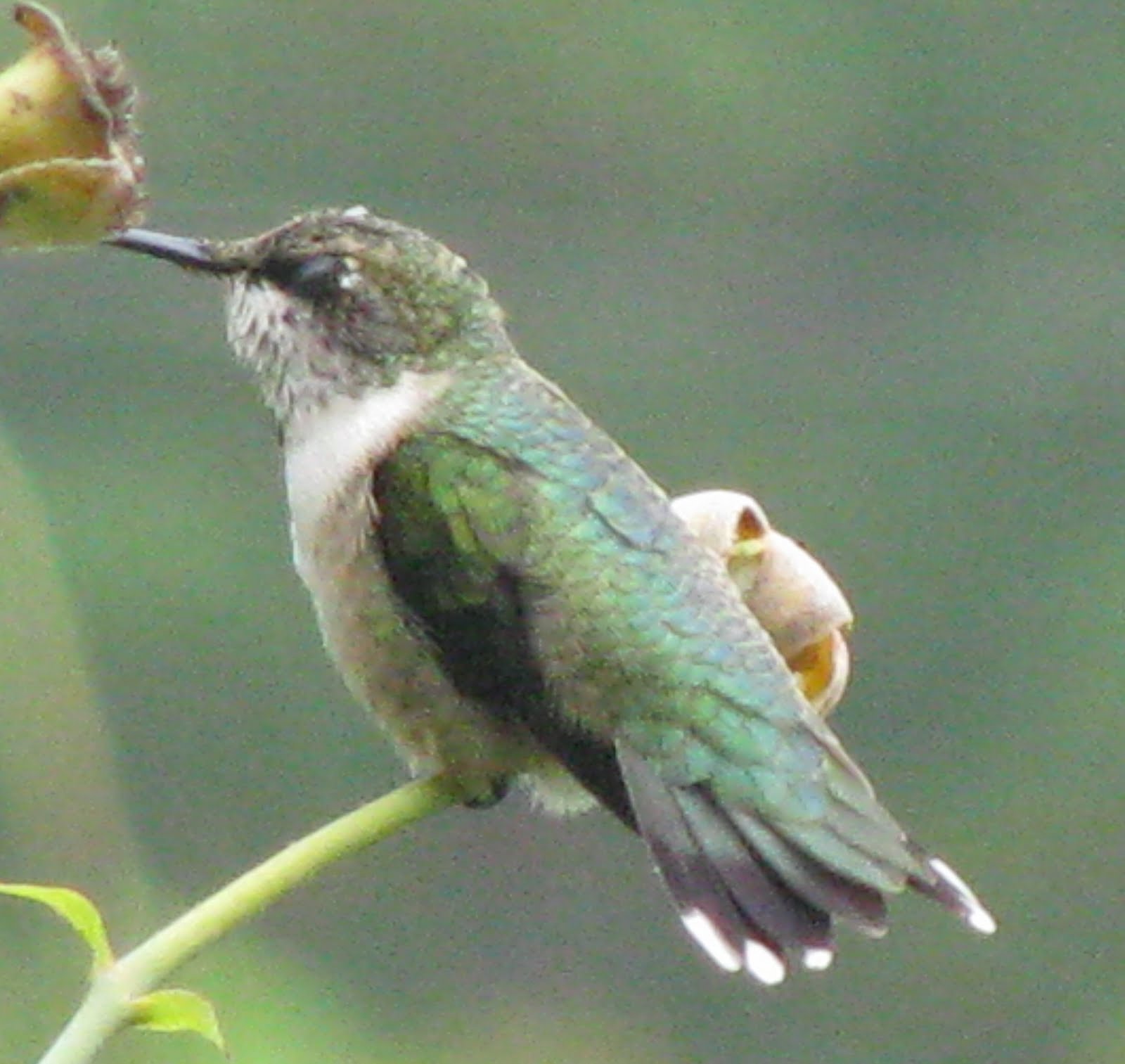
During Summer I’m usually outside as soon as the sun is up. Early morning is an exciting time to be awake and out and about the farm. As I make my way to the garden, I hear the black capped chickadees call “fee bee – fee bee” and the Rufous-Sided Towhees call “drink your tea, drink your tea”. I notice how the rabbits sit perfectly still as they hope to blend into their surroundings. As I walk into the garden the ruby throated hummers zoom in to the feeders with a chit-chit, chit-chit which I suppose means good morning!!

As I work in the garden, I enjoy my breakfast of blackberries and blueberries and cucumbers! For several weeks we have been picking gallon after gallon of blueberries. We eat them fresh, give many away and then freeze the remainder. Blueberries freeze well and can be used throughout the year to make delicious smoothies, jams or jellies, muffins, etc.

During the hot afternoon, we cool off with blueberry smoothies


or afternoon slices of watermelon!

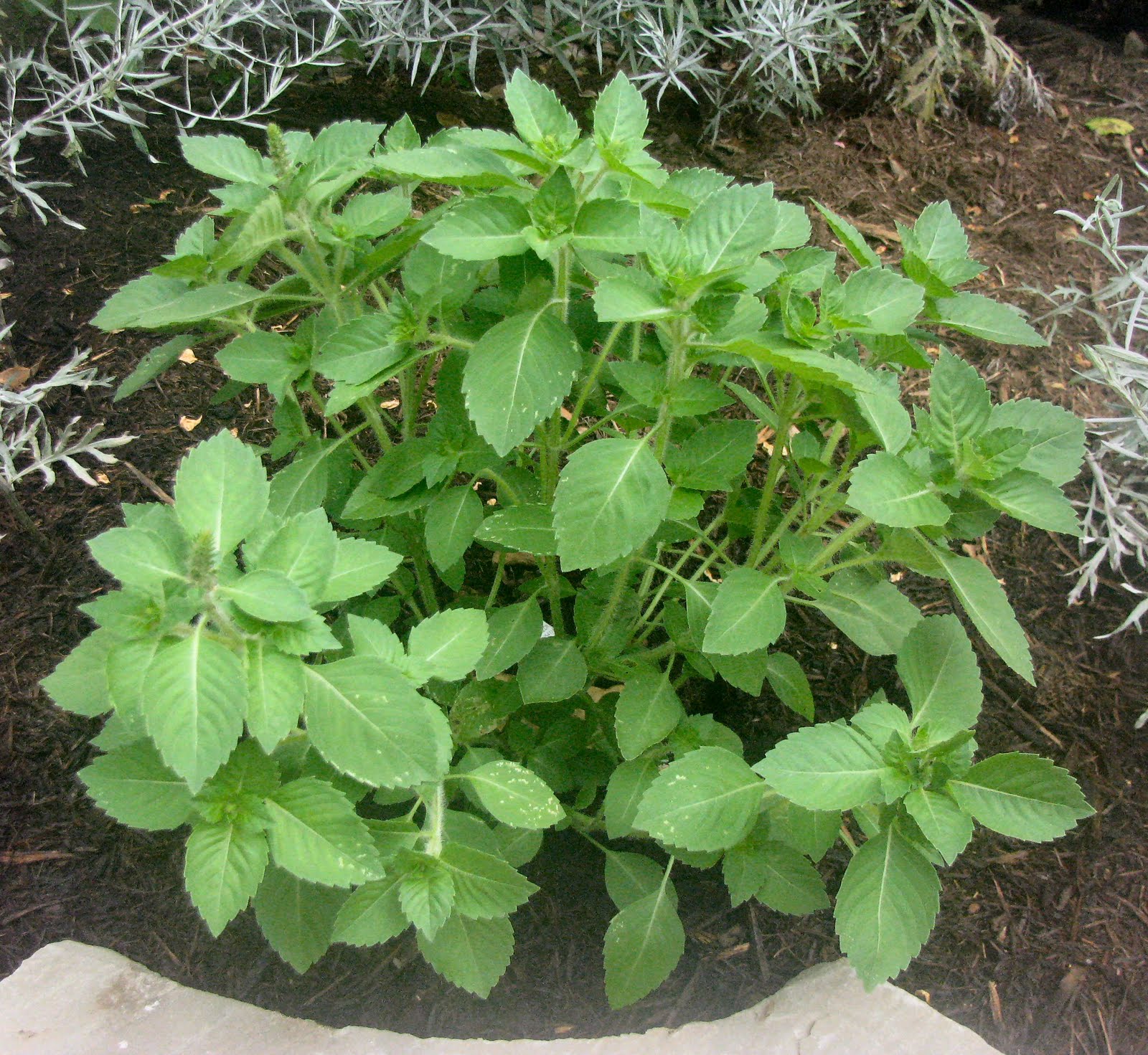
Our organically grown Cucumbers have produced beautifully this year! Last evening I made a Cucumber and Tomato Salad with Thai Basil. The recipe is easy – just one crisp, cold cucumber sliced very thin, one or two Roma tomatoes diced, toss in a handful of fresh Thai Basil leaves, a dash of Organic Extra Virgin Olive Oil, a dash of Balsamic Vinegar, some sea salt and ground pepper – toss all together – top off with Feta cheese. Nutritious and Delicious and Cool!

Botanicals From The Herbarie! – Cucumber Extract WS

We use these same organically grown cucumbers to process our wonderful Cucumber Extract WS! Our Cucumber Extract WS is NOT EDIBLE, but is truly fabulous for skin care and the perfect gentle astringent for summer.

Last week I came up with a simple, but very nice and emollient facial cleanser and eye makeup remover using our Cucumber Extract WS and Olive Oil PEG 7 Esters.

Olive Oil PEG 7 Esters

Multifunctional Olive Oil PEG 7 Esters (Olivem 300) continues to be one of our best selling products! Olive Oil PEG 7 Esters offers the rich emolliency of Olive Oil in a uniquely water soluble and oil dispersible product!

Olive Oil PEG 7 Esters is a lovely, multifunctional ingredient for dispersible bath oil blends, oil based facial cleansers, water based facial cleansers. It can also be used as a co-emulsifier in creams and lotions, and as a re-fatting agent in shampoo or body wash that will not compromise foam.

Cool Cucumber Olive Facial Cleanser and Eye Makeup Remover

15% Olive Oil PEG 7 Esters
74% Cucumber Extract
1% Cosmocil CQ

This simple formula is the best eye makeup remover I’ve ever used and just a few drops on a cotton pad will do it. All ingredients are safe for leave-on products so it doesn’t have to be rinsed off. I typically use this formula as an overall facial cleanser and eye makeup remover in the shower with rinse-off. It leaves my skin soft and smooth and feeling great! This formula is not thick, but I find it to be the perfect viscosity for my own use. I’ve packaged mine in a bottle with a dispensing cap.

But there are all sorts of possibilities with this formula:

  • To thicken this formula, it would be possible to use HEC or HPMC or XanThix or UltraMaize. I haven’t experimented with the percentages, but would try 0.5%-1.0% HEC or HPMC or UltraMaize. Maybe 0.1% XanThix. A thickened formula could be packaged in a tube or pump container.

  • Nice additives could include our Rose Phytolate, Olive Leaf Extract, Antioxidant Complex T5, Edelweiss Extract, Helichrysum Extract, Hibiscus Extract, Licorice Root Extract, Honeysuckle Extract WS, Tamarind Seed Extract, or Symglucan.

More From the Sacred and Noble Olive TreeThe ancient olive tree is rich in folklore and offers many wellness, skin and hair care benefits. I learned the benefits of olive oil at an early age from my southern Italian mother. She used Olive Oil for everything – cooking, skin care and hair care. I now do the same thing.

We’ve recently added two new Olive products to our inventory! In addition to our Organic Certified Extra Virgin Olive Oil, Olive Oil PEG 7 Esters, Olivem 1000 and Olive Leaf Extract, we are excited to offer Oliwax and Oliwax LC!


Oliwax is a completely natural, multifunctional lipid obtained 100% from Olive Oil. Oliwax is rich in squalene and unsaponifiable olive oil fractions and recommended for both skin care and hair care. Oliwax is conditioning and will build structure and increase viscosity in creams and lotions as well as anhydrous products such as body butters, lip balms, and salves. The unique “crystal network” is similar to human skin lipids and promotes excellent delivery to skin. Unlike many other waxy lipids, Oliwax offers conditioning with a light, silky-smooth feel.

Clinical tests have demonstrated that Oliwax is hypoallergenic and an excellent choice for sensitive skin. Oliwax has not been tested on animals, is completely biodegradable and compatible with most cosmetic ingredients.

Oliwax is stable to oxidation, is odorless and colorless and offered in easy to use flake form. The melt point is approximately 55° C which allows substitution for waxy products such as beeswax and other waxes.

I’ve made a super emollient, conditioning lotion using Olivem 1000 as the complete emulsifier with Oliwax as the stabilizing, conditioning, and “bodifying” agent. Botanical Olive Natural Lotion is very moisturizing and conditioning, but doesn’t feel greasy, waxy or oily. I’ll outline the various ingredients and their functionality:

Cupuaçu Butter is one of my favorite butters for skin care and hair care. It contains phytosterols and unsaponifiables that help to regulate the balance and activity of lipids in the epidermis and it does not have a greasy feel when used in emulsions. It has a high capacity for water absorption which gives it superior moisturizing properties. Cupuaçu Butter offers a lovely emolliency that will restore elasticity and softness to skin.

Our Organic Certified Golden Jojoba Oil is actually a liquid wax ester with characteristics similar to skin. Jojoba Oil is stable to oxidation, is absorbed quickly and has a feel that I love – I use it in almost all my products.
Olive Squalane is an emollient lipid with excellent stability and provides a nice slip to this formula.

XanThix is a water phase stabilizer and viscosity builder. At low percentages (0.1%-0.3%) XanThix will enhance the feel and slip in application. When XanThix is used at higher percentages, the esthetics of the formulation will diminish. XanThix is water soluble. Like most other gums, XanThix works by swelling in water. Even though XanThix is water soluble, it’s more easily added to the oil phase of emulsions. Other gums, such as HPMC or HEC can also easily be added to the oil phase of emulsions. First heat the oil phase to the desired temperature – usually around 175F – then add the pre-weighed XanThix to the hot oils/lipids with gentle stirring to be sure the particles have separated. Then proceed with the formulation as usual. Swelling will occur during cool-down and viscosity of the formulation will increase as a result.

SymGlucan® is an exciting multifunctional, antiaging ingredient manufactured by Symrise. SymGlucan® is made by a patented technology which refines Oat Beta-Glucan to produce a highly active soluble fraction. SymGlucan® has been clinically shown to penetrate the skin and help reduce the visible signs of aging. SymGlucan’s unique delivery system stimulates fibroblast growth and collagen synthesis which reduces the appearance of wrinkles. Studies have also demonstrated SymGlucan® to be an excellent moisturizer that provides even better long-term moisturization than Hyaluronic Acid. SymGlucan helps to restore skin’s youthful elasticity and softness. I use SymGlucan at 5% in most of my emulsions and can definitely tell the difference when using it.


Chia Seed CO2 Extract is unique as it contains the highest concentration vegetarian source omega-3 linolenic acid. These high concentrations of alpha linolenic acid help both skin and hair to maintain moisture. In addition to moisturization, Chia Seed CO2 Extract promotes skin elasticity and can help to reduce the appearance of wrinkles. Nutrient-rich Chia Seed CO2 Extract offers skin smoothing characteristics leading to soft, silky and healthy skin. Chia Seed CO2 Extract can also be used for effective moisturization in hair and scalp formulations. I add this oil at cool-down temperatures.

For the Botanical Olive Natural Lotion, I’ve chosen a blend of extracts and essential oils to provide a wonderful scent as well as antimicrobial activity. Lavender Flower CO2 Extract, Rose Geranium Essential Oil, Bergamot FCF Essential Oil, and just a touch of Ylang Ylang Essential Oil provide a fresh, green-floral scent that I just adore!

Nowadays, most customers are looking for less aggressive preservatives and “natural preservatives”. Unfortunately there is no one perfect natural preservative that we can simply put into our finished formulations as an afterthought. Creating an effective preservative system takes time and testing for each and every formulation. What works for one formulation, may not work for another. It’s always best to create a formula from start to finish with the preservative system in mind.

I’ve combined these antimicrobial oils to work in synergy with Rosemary Antioxidant CO2 Extract and Leucidal Liquid to offer a broad-spectrum preservative system in this formula.

The Herbarie offers many natural antimicrobials such as Leucidal Liquid, Aspen Bark Extract, Usnea Lichen CO2, Cucurma Xanthorrhiza, Geogard Ultra, Rosemary Antioxidant CO2 Extract and others. It will be up to the creative cosmetic formulator to mix and match and combine these ingredients for broad spectrum antimicrobial activity. Using hurdle technology, smart packaging and good manufacturing practices will definitely help. However, the only way to know for sure whether or not a preservative system is effective is with microbial testing. We work collaboratively with an independent lab and have developed a protocol for inexpensive “Normal Usage Testing”. If anyone is interested, please send me an email and I’ll be happy to share the information.

We are in the process of testing our Botanical Olive Natural Lotion, but our results are not yet complete. We are in our second round of microbial testing and the results are very promising – less than 30 cfu/gram for bacteria and less than 10 cfu/gram for mold/fungus/yeast. We will continue microbial testing on this formula for up to one year.

Here’s my formula with a 500 gram batch calculated. I hope you enjoy Botanical Olive Natural Lotion as much as I do!

Botanical Olive Natural Lotion

Part A or Oil Phase
5.0% = 25 grams Olivem 1000
2.0% = 10 grams Oliwax
8.0% = 40 grams Cupuacu Butter
5.0% = 25 grams Organic Golden Jojoba Oil
3.0% = 15 grams Olive Squalane
0.4% = 2 grams XanThix

Part B or Water Phase
65.95% = 329.75 Distilled Water
5.0% = 25 grams Symglucan

Part C or Cooldown Phase
2.0% = 10 grams Chia Seed CO2
0.05% = 0.25 grams Rosemary CO2 Extract
0.5% = 2.5 grams Lavender CO2 Extract
0.5% = 2.5 grams Bergamot FCF EO
0.5% = 2.5 grams Rose Geranium EO
0.1% = 0.5 grams Ylang Ylang EO
2.0% = 10 grams Leucidal Liquid

Total: 100% = 500 grams

Part A: Weigh XanThix and set aside. Combine remainder of ingredients and heat to 175F. Add XanThix to heated mixture and stir gently.
Part B: Combine ingredients and heat to 175F. Add Part B to A with high shear mixing. Cool to 50C/122F (or less)
Part C: Add ingredients, mix well until completely cool.


Oliwax LC is a Liquid Crystal Promoter derived from Olive Oil fatty acids. Oliwax LC is designed to stabilize oil in water emulsions while enhancing the texture and feel in application. The unique “crystal network” is similar to human skin lipids and promotes excellent delivery to skin. Unlike many other waxy lipids, Oliwax LC offers stabilization with a light, silky-smooth feel.

Suggested Applications:
â—Ź Daily Moisturizers
â—Ź Night Creams
â—Ź Eye Creams
â—Ź Products for Sensitive Skin
â—Ź After-sun Creams and Lotions
â—Ź Sun-care products
â—Ź Makeup Foundation


I’m currently using a really nice moisturizer made with everything Olive! Olive Tree Skin Renew Lotion is moisturizing and conditioning, yet leaves my face feeling soft and smooth – no greasiness and no whitening effect in application. This antiaging formula is based on the complete emulsifier Olivem 1000 with Oliwax LC to enhance stability and improve texture. The Liquid Crystal structure of Oliwax LC allows for greater emulsion stability and moisturization capabilities.

Here’s some information about the other wonderful ingredients:

Olive Squalane provides superb emolliency and slip and Organic Certified Extra Virgin Olive Oil provides good nutrition for skin.

Olive Leaf Extract (Eurol BT) is a multifunctional active ingredient from a natural blend of diphenolic structures such as Oleuropein. Olive Leaf Extract serves as a free-radical scavenger and antioxidant, but also offers hydrating and anti-inflammatory characteristics.

Matrix Peptide is an active antiaging ingredient suitable for creams, lotions, serums and toners. Matrix Peptide can reduce the appearance of wrinkles by promoting the synthesis of collagen.

The active constituents of Tamarind Seed Extract are of great benefit in skin care. Studies have shown that Tamarind Seed Extract significantly improves skin elasticity, hydration and smoothness.

Coviox T-50 or mixed tocopherols, serve as the antioxidant in this formula to help delay oxidation of oils and provide a longer shelf-life for this formula. Germall Plus Liquid is a robust preservative for this formula.

And here’s the formula:


Olive Tree Skin Renew Lotion

Part One or Oil Phase
5.0% Olivem 1000
3.0% Oliwax LC
5.0% Olive Squalane
5.0% Organic Extra Virgin Olive Oil
0.5% Coviox T 50

0.1% XanThix

Part Two or Water Phase
75.85% Distilled Water

Part Three or Cooldown Phase
0.25% Olive Leaf Extract
4.0%Tamarind Seed Extract
1.0% Matrix Peptide
0.3% Germall Plus Liquid

Part One: Weigh XanThix and set aside. Combine all other ingredients and heat to 175F. Add XanThix to hot oils while stirring gently to separate particles.

Part Two: Heat Distilled Water to 175F, add to Part One with mixing. Using a stickblender for small batches works fine. As emulsion begins to cool, switch to a handheld stir tool such as our stainless steel wire whip.

Part Three: When temperature of emulsion cools to 115F or less, combine ingredients and add to combined Part One/Two. Mix well until emulsion is completely cool.

Tip: For small batches weighing 500 grams or less, I often use a gallon or quart size plastic freezer bag for dispensing emulsions into bottles. When batch is complete, scoop into the freezer bag and seal. Cut off the tip of the bag and dispense into bottles – easy peasy!

Happy Formulating!

**************************************************************

A Bit More Stoney Hill Farm News!

-Update on Sally!

Sally has finished her 19 radiation treatments – yay! – and she is doing very well! These treatments were Monday through Friday and Sally had to be anesthetized each day. Even though it’s been “ruff” she has maintained a positive attitude and even has pep in her step on the good days 🙂

Sally is pictured here with the wonderful oncology team at Upstate Veterinary Specialists in Greenville, SC. Everyone has been so good to Sally and she will miss seeing them. Sally’s oncologist, Dr. Sarah Kraiza (in dark gray behind Sally) is one of the nicest people I’ve ever met. Dr. Kraiza is a talented doctor, but also has an extraordinary gift of kindness and truly went the extra mile to make this experience as good as it could possibly be for all of us.

We are looking forward to a full recovery and many good times ahead!


**********************

-We were happy to have a family of Eastern Bluebirds build a nest close to our office and garden. Yesterday Earl spent several hours observing Mom and Dad Bluebird trying to teach the last little one to leave the nest.

Bluebird House Near Office


Bluebird Male

Feeding the last little one.

Last But Not Least

What If I Can’t Fly?

Bluebird Dad demonstrates how it’s done and is ready to offer positive reinforcement. As of this morning, all babies were out of the nest and flying on their own!

Best Wishes for Fearless Flying, Fun Formulating, and Staying Coooool As a Cucumber this Summer!

Angie

Posted in Musings From Stoney Hill Farm | 1 Comment